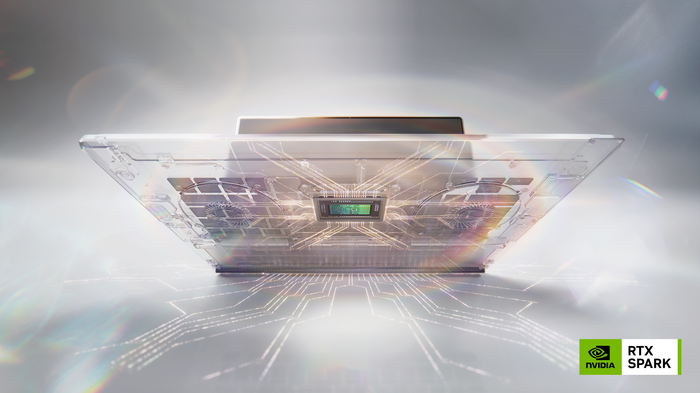
NVIDIA used GTC Taipei at COMPUTEX 2026 to make a bigger argument than “new laptops are coming.” The company’s message was that the PC is moving from a box that opens apps to a local AI workstation that can run personal agents, creator workloads, games, and developer tools directly on the device.
That is the important part for customers on the Treasure Coast. The first wave of these systems will probably be expensive, early-adopter hardware. But the direction is clear: the next few years of business PCs, creator laptops, and high-end desktops will be judged less by “does it have AI branding?” and more by whether the machine can run useful AI work locally, securely, and fast enough to matter.
In this article:
Quick Take
- NVIDIA RTX Spark is the headline. NVIDIA describes it as a new Windows PC platform for personal AI agents, built around a Blackwell RTX GPU, Grace CPU, FP4 AI acceleration, and up to 128GB of unified memory.
- The first RTX Spark PCs are expected this fall. NVIDIA named ASUS, Dell, HP, Lenovo, Microsoft Surface, and MSI first, with Acer and GIGABYTE models to follow.
- Not every COMPUTEX system is RTX Spark. NVIDIA partners also showed RTX 50 Series laptops, desktops, graphics cards, and monitors for gaming and creator workloads.
- The business case is local AI. NVIDIA and Microsoft are pitching PCs that can run agents and large models locally instead of sending every request to the cloud.
- Our advice: wait for real pricing and reviews. The concept is strong, but small businesses should not rush into first-wave AI PCs until software support, security controls, thermals, battery life, and support terms are clearer.
What NVIDIA Announced
The centerpiece was NVIDIA RTX Spark, a new superchip and Windows PC platform that NVIDIA says is purpose-built for personal AI agents. NVIDIA’s public specs include a Blackwell RTX GPU with 6,144 CUDA cores, fifth-generation Tensor Cores with FP4 precision, NVLink-C2C between the CPU and GPU, a 20-core NVIDIA Grace CPU, up to 1 petaflop of AI performance, and up to 128GB of unified memory.
NVIDIA’s pitch is not only speed. The company is trying to make the PC feel like a private, always-available assistant that can see files, understand applications, run local models, and help with workflows without every task leaving the device. That is why Microsoft is part of the story: NVIDIA says the Windows side will include new security primitives, while NVIDIA OpenShell adds policy controls for what local agents can and cannot do.
The most eye-catching workload claims are aggressive: NVIDIA says RTX Spark can run 120-billion-parameter language models with up to a 1-million-token context, render very large 90GB-plus 3D scenes, edit 12K 4:2:2 video, generate 4K AI video, and still play AAA games at 1440p with high frame rates. Those numbers are exciting, but they should be treated as platform claims until independent reviews test shipping machines.
New Computers And Hardware Shown Around COMPUTEX
Below are the machines and product families that stood out from the official NVIDIA and manufacturer announcements. Some are direct RTX Spark systems; others are RTX-powered gaming and creator machines shown by NVIDIA partners at COMPUTEX.
ASUS ProArt P16, ProArt P14, And ProArt Mini PC
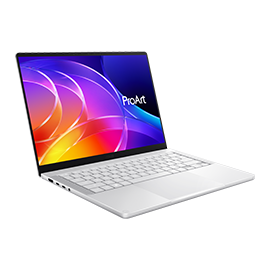
ASUS is one of the clearest examples of how RTX Spark is being packaged for creators. ASUS says its ProArt P16 and P14 are the first ASUS creator laptops powered by NVIDIA RTX Spark, with the ProArt Mini PC also joining the lineup. ASUS is targeting video editors, designers, 3D artists, developers, and AI workflow builders rather than ordinary office users.
According to ASUS, the ProArt P16 and P14 use Lumina Pro OLED displays, offer up to 128GB unified memory, and are planned for fall 2026 availability in select regions. ASUS also emphasizes creator workflow tools such as ProArt Creator Hub, StoryCube, and MuseTree. For buyers, the practical appeal is simple: this is the type of machine that could run creative apps and local AI tools without forcing every heavy task into a cloud subscription.
Dell XPS 16 Creator Edition
Dell announced an upcoming XPS 16 Creator Edition powered by NVIDIA RTX Spark. Dell says the machine is meant to move XPS beyond standard productivity and into serious creator-class performance, with up to 128GB unified memory, smoother 4K timeline playback, faster exports, better multitasking across complex 3D scenes, and more responsive AI-assisted creation.
The interesting detail for working creators is Dell’s focus on real ports and display quality: Tandem OLED, True Black HDR 600, HDMI, and an SD card reader. That matters because many thin premium laptops have been beautiful but adapter-heavy. If AI PCs are going to replace mobile workstations, they need more than a fast chip; they need practical connectivity.
HP OmniBook Ultra 16 And OmniBook X 14
HP says it will bring RTX Spark to the HP OmniBook Ultra 16 and HP OmniBook X 14 later this year, with a compact desktop planned as well. HP is pitching these systems for creators, gamers, AI developers, and enterprise users who want local AI and Windows integration in familiar PC form factors.
For small businesses, HP’s announcement is worth watching because OmniBook is closer to mainstream business buying than boutique workstation hardware. Pricing and exact configurations were not final at announcement time, so this is a “watch list” item rather than a buy-now recommendation.
Microsoft Surface Laptop Ultra
Microsoft’s Surface Laptop Ultra is the most direct example of Microsoft and NVIDIA trying to make the AI PC feel like a premium Windows workstation. Microsoft says it is the most powerful Surface Laptop it has built, optimized for RTX Spark, with a Blackwell RTX GPU, up to 128GB unified memory, full CUDA support, 1 petaflop of AI compute, and the ability to run up to 120B-parameter models locally.
Microsoft also highlights a 15-inch mini-LED PixelSense Ultra touchscreen, up to 2,000 nits peak HDR brightness, a large haptic touchpad, and useful ports including HDMI, USB-C, USB-A, SD card, and headphone. It is expected later this year, but like the other first-wave RTX Spark machines, actual pricing and real-world thermal performance will matter.
MSI, ZOTAC, Acer, And Other RTX Systems
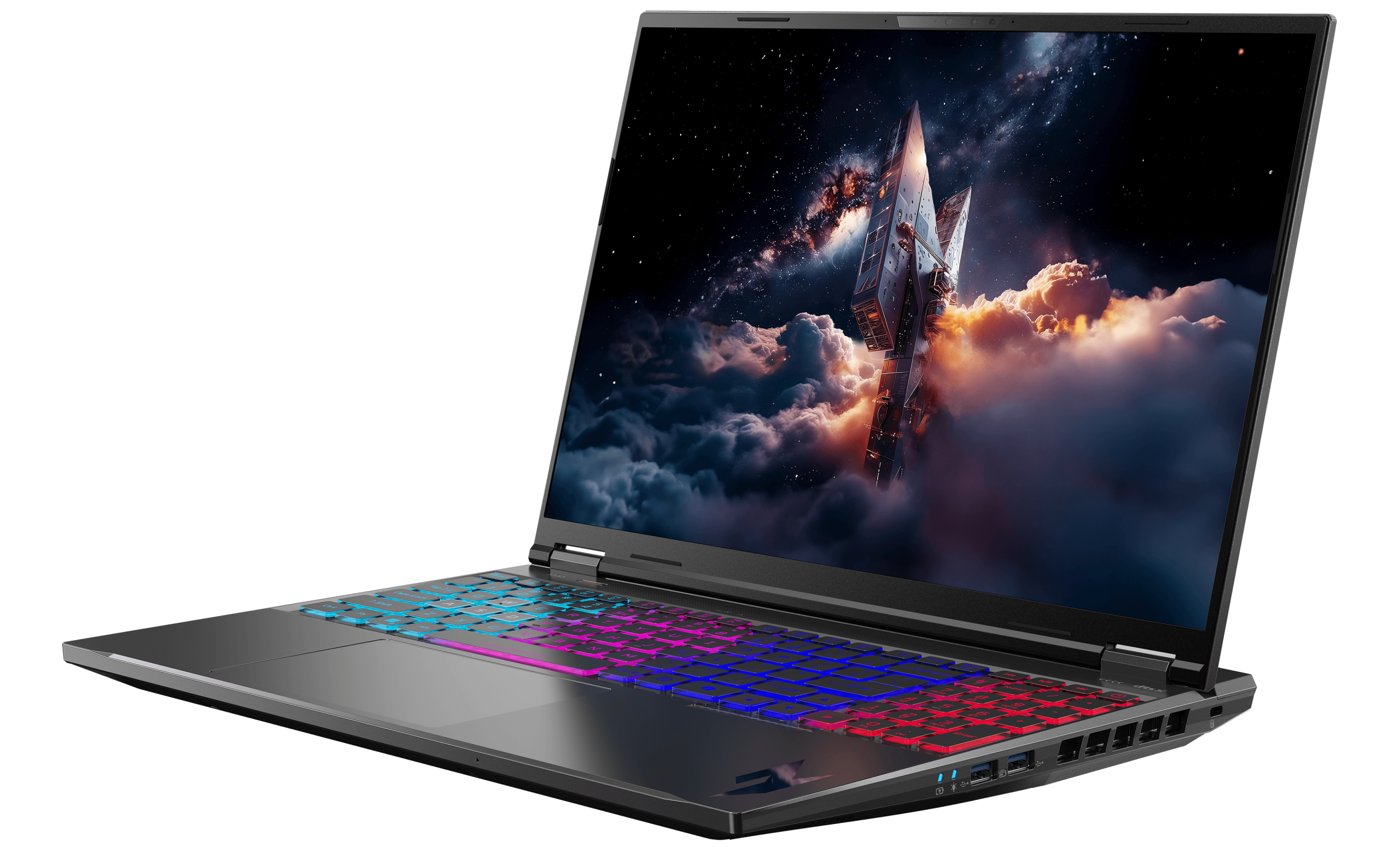
NVIDIA’s partner showcase also included RTX 50 Series graphics cards, RTX laptops, prebuilt desktops, and displays. These are not all RTX Spark “personal agent” systems, but they show where the broader NVIDIA PC ecosystem is heading: more local AI acceleration, more creator features, and more PC designs that treat AI as a normal workload.
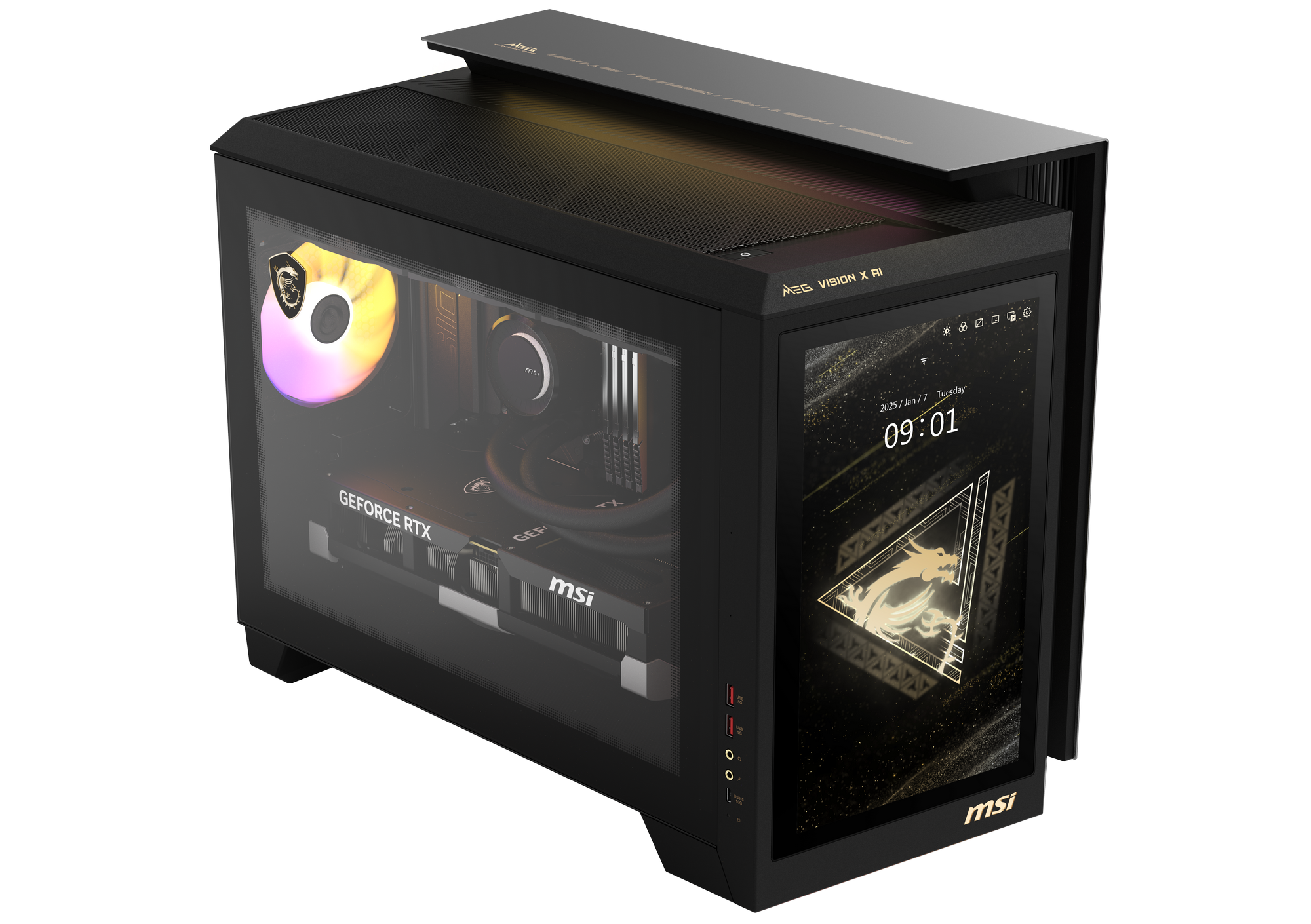
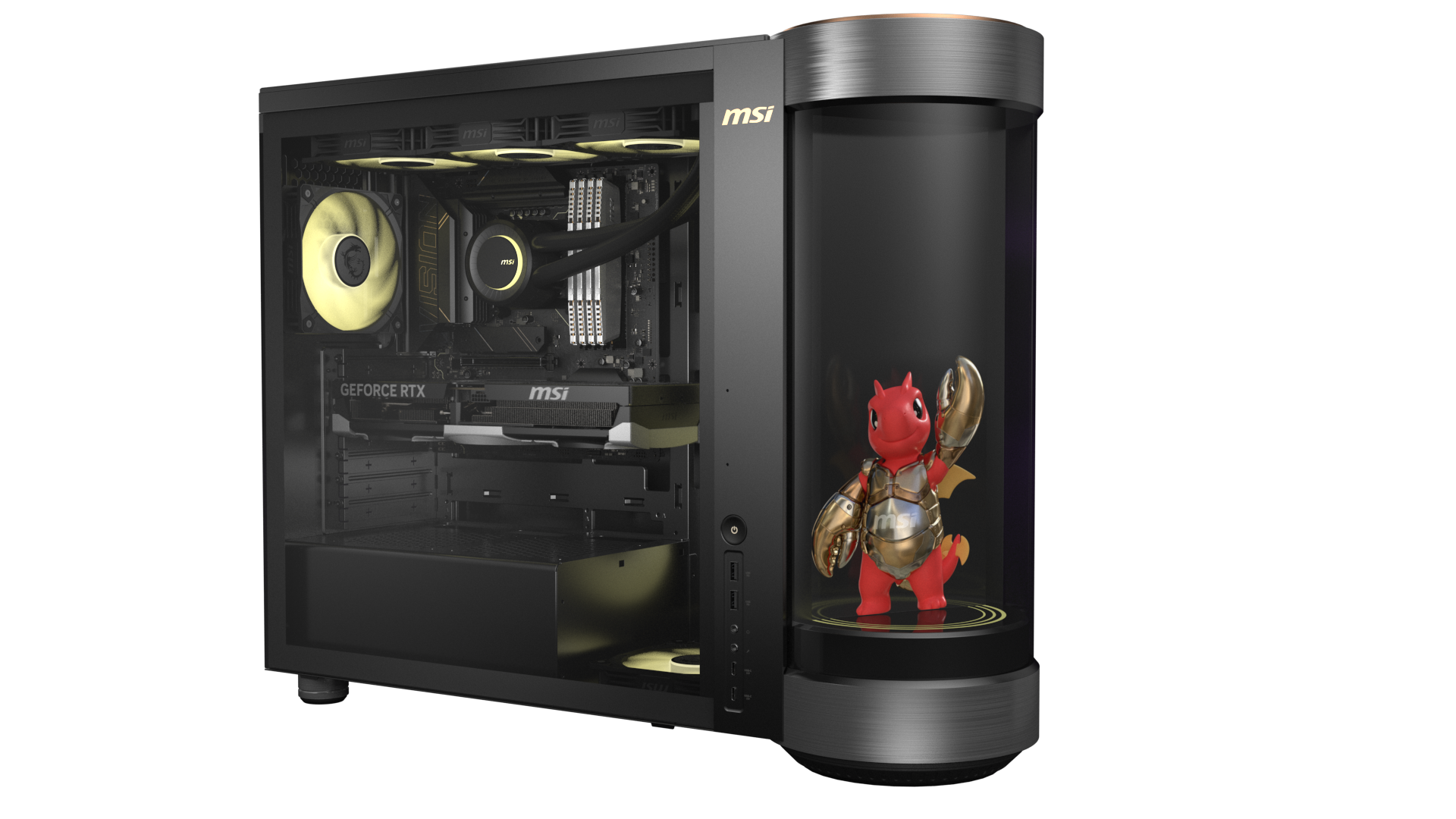
MSI’s MEG Vision X AI 2nd is a large prebuilt desktop with a 13-inch touchscreen, built-in mic and speaker, and voice-command features for system controls. NVIDIA says it is available now with either a GeForce RTX 5090 or RTX 5080, 64GB of RAM, a 360mm AIO CPU cooler, and high-end desktop hardware.
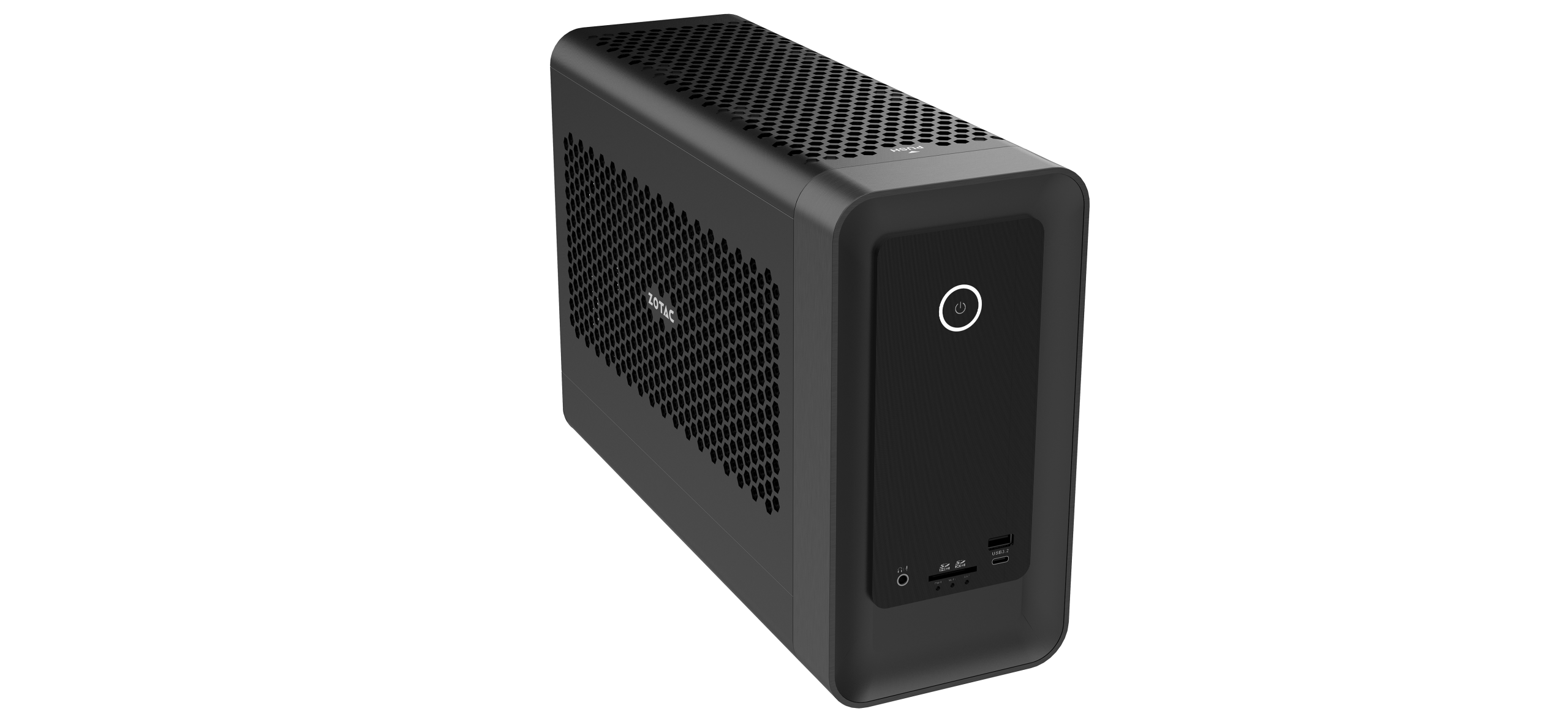
MSI also showed the MEG Vision X2 AI+, which combines an AI Holostage with a local AI companion concept for voice control and system interaction. ZOTAC’s MAGNUS One Ultra is a compact prebuilt system that ZOTAC rates as the world’s smallest prebuilt with a desktop GeForce RTX 5080, with an 11.46-liter chassis, Thunderbolt 4, multiple USB ports, and room for storage expansion.
How NVIDIA Sees The Future Of AI PCs
NVIDIA’s vision is that everyone will have more AI running close to them: on laptops, desktops, deskside supercomputers, workstations, and enterprise systems. The phrase that matters is local personal agents. In NVIDIA’s framing, a future PC is not just a device that opens Word, Chrome, Photoshop, or QuickBooks. It is a machine where an agent can understand what you are doing, inspect local files, help across apps, generate content, code, search, summarize, automate repetitive steps, and protect privacy by keeping more work on the device.
That is powerful, but it also raises the security bar. A local AI agent that can act across files and apps needs strong identity, containment, permissions, audit trails, and limits. NVIDIA and Microsoft are talking about those controls, but small businesses should not assume every AI feature is automatically safe. The more capable the assistant, the more important policy and oversight become.
What This Means For Small Businesses
For most offices, these first RTX Spark machines are not going to replace every employee laptop right away. A receptionist, bookkeeper, field tech, or sales rep probably does not need a first-generation premium AI workstation. But some users may benefit sooner:
- Marketing and media teams editing video, creating ads, managing product photos, or generating local AI content.
- Engineers, designers, and CAD users who already need GPU acceleration and large memory pools.
- Developers and automation builders experimenting with local models, coding agents, and private workflow tools.
- Businesses with sensitive data that want AI help without sending every file, transcript, or customer record to a cloud model.
- Power users replacing workstations who want one portable machine for AI, creative apps, and normal Windows work.
The buying decision should start with the workflow, not the label. “AI PC” by itself is not enough. Ask what model size you need to run, what apps are optimized, whether your data can stay local, whether the software has admin controls, and whether the device can be supported like a normal business PC.
Buying Cautions Before Jumping In
- Pricing is still a major unknown. First-wave premium AI PCs may be expensive, especially with large unified memory configurations.
- Wait for independent thermal and battery tests. A powerful chip in a slim laptop still has to manage heat, fan noise, and sustained performance.
- Confirm app support. NVIDIA says Adobe, Blender, ComfyUI, Blackmagic Design, OTOY, and others are embracing RTX Spark, but buyers should verify the exact software they depend on.
- Do not ignore data governance. Local AI can improve privacy, but only if permissions, logging, and user controls are configured correctly.
- Do not buy for hype. If a business only needs email, web apps, accounting, remote meetings, and basic documents, a reliable standard business laptop may still be the smarter purchase.
The IT Guys Take
NVIDIA is probably right about the direction: more AI will run locally, and future PCs will be expected to handle private agents, creative generation, local search, automation, and real-time assistance. But the first generation of RTX Spark systems should be treated like high-end workstations, not generic office laptops.
For Treasure Coast businesses, the smart move is to identify which roles actually need local AI power, then build a policy around safe use. That means deciding what data an AI assistant can access, what actions it can take, where logs are stored, and when cloud AI is allowed. The hardware is exciting, but the business value will come from the setup, workflow, and security controls around it.
If you are planning a laptop refresh later this year and want to know whether RTX Spark or another AI PC platform makes sense, The IT Guys can help compare the machines against the work your team actually does instead of buying based on a sticker on the box.
Related Reading
- Important Tech News Roundup: June 17, 2026 – FortiBleed, Joomla, Microsoft Defender, Office, Gemini, And AI Access
- A Robot Did Surgery With Almost No Human Help: What Actually Happened And Why It Matters
- 5 PM Tech News Recap for June 22, 2026: Android Verification, AI Security, DifyTap, Squidbleed, OXLOADER, And Data Centers
Sources
- NVIDIA Newsroom: NVIDIA and Microsoft Reinvent Windows PCs for the Age of Personal AI
- NVIDIA GeForce: COMPUTEX 2026 announcements
- NVIDIA GeForce: COMPUTEX 2026 partner product showcase
- NVIDIA Blog: GTC Taipei at COMPUTEX live updates
- ASUS: ProArt P16 and P14 with NVIDIA RTX Spark
- ASUS Pressroom: Computex 2026 AI PC lineup
- Dell: XPS 16 Creator Edition with NVIDIA RTX Spark
- HP: PCs powered by NVIDIA RTX Spark
- Microsoft Devices Blog: Surface Laptop Ultra