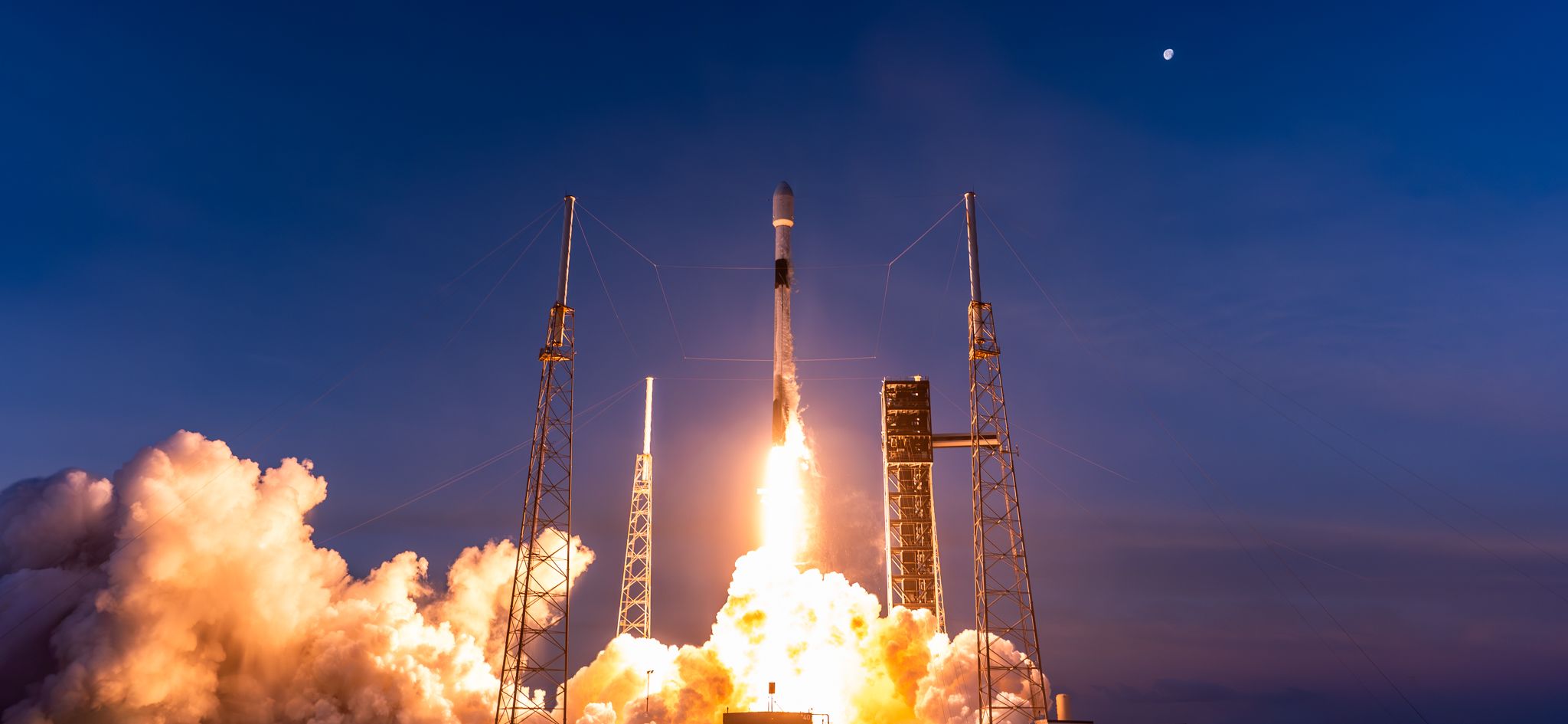
Bottom line: SpaceX’s Florida Falcon 9 launch this week was the Starlink 10-43 mission. According to SpaceX’s own mission page, Falcon 9 launched 29 Starlink satellites to low-Earth orbit from Space Launch Complex 40 at Cape Canaveral Space Force Station at 6:26 a.m. ET on Thursday, June 4, 2026. The first stage booster then landed on the A Shortfall of Gravitas droneship in the Atlantic Ocean.
If you saw the launch described as “nine satellites,” that appears to be a mix-up with a different SpaceX customer mission or a shortened headline. For this Florida Starlink launch, SpaceX’s verified mission data says 29 Starlink satellites.
In this article
- What launched from Florida
- Why another Starlink launch matters
- The booster landing
- Good and bad points
- What to watch next
What launched from Florida
The mission was Starlink 10-43, a Falcon 9 launch carrying 29 Starlink satellites. SpaceX lists the launch site as SLC-40, Florida, which is one of the company’s busiest pads at Cape Canaveral Space Force Station.
The launch time matters because this was an early morning Florida launch: 6:26 a.m. Eastern on June 4, 2026. SpaceX’s mission timeline lists satellite deployment at about one hour and 43 seconds after liftoff. The same timeline shows the first stage landing at about 8 minutes and 23 seconds after launch.
That is the normal rhythm of a modern Starlink mission now: liftoff, main engine cutoff, stage separation, second-stage ignition, fairing separation, booster entry burn, droneship landing, second-stage coast, and then satellite deployment roughly an hour after launch.
Why another Starlink launch matters
Starlink launches can start to feel routine because SpaceX flies them so often, but they still matter for regular customers. Starlink is SpaceX’s satellite internet network, designed to provide broadband coverage from low-Earth orbit. That can be useful in rural areas, on boats, for backup connectivity, for disaster response, and for places where cable or fiber internet is not practical.
For Florida customers, the disaster-prep angle is worth paying attention to. A satellite internet system is not a replacement for normal wired internet in every home or office, but it can be a serious backup option when storms, construction, power outages, or damaged lines interrupt normal service. The IT Guys still recommends treating any backup internet plan as part of a larger continuity setup: battery power, router planning, account access, cloud backups, and clear instructions for who plugs in what during an outage.
The booster landing
SpaceX says this was the 12th flight for the first stage booster supporting the mission. Its previous missions included SES O3b mPOWER-E, Crew-10, Bandwagon-3, mPOWER-D, CRS-33, and seven Starlink missions.
After stage separation, the booster returned for an offshore landing on A Shortfall of Gravitas. That landing is not just a fun video moment. Reusing boosters is a major reason SpaceX can fly Starlink missions at this pace. Each successful landing gives SpaceX more hardware history, more inspection data, and more confidence in repeated flights.
Good and bad points
Good points
- More coverage and capacity: another 29 satellites adds to the Starlink network that many rural and mobile users rely on.
- Reusable booster success: the first stage completed another droneship landing after its 12th flight.
- Useful emergency option: satellite internet can be valuable for hurricane preparation, remote work, field crews, and backup communications.
- Official webcast is available: SpaceX’s X broadcast gives viewers the launch feed instead of relying on clipped reposts.
Bad points or cautions
- Satellite internet still needs power: if the power is out, Starlink needs a battery, generator, or other power plan to be useful.
- Weather and obstructions matter: heavy rain, trees, roof placement, and line-of-sight problems can affect service.
- Do not confuse missions: SpaceX has multiple Falcon 9 missions, including Starlink and customer satellite launches, so headlines can blur the details.
- Business backup internet needs testing: do not wait until a storm to find out whether your router, payment terminal, phones, VPN, or cloud apps work over the backup connection.
What local customers should watch next
For home users, the practical question is whether satellite internet solves a real problem: poor wired service, temporary work sites, travel, storm backup, or remote property connectivity. If you already have reliable cable or fiber, Starlink may make more sense as a backup or special-purpose connection than as a full replacement.
For small businesses, the better question is continuity. If your credit card terminal, phone system, cloud files, security cameras, dispatch software, or remote access depends on internet service, then backup connectivity is worth planning. That can be Starlink, cellular failover, a second wired provider, or a combination. The right answer depends on location, budget, speed needs, and how much downtime costs the business.
FAQ
Did SpaceX launch nine satellites from Florida?
For the Starlink 10-43 mission, no. SpaceX’s official mission page says Falcon 9 launched 29 Starlink satellites. A nine-satellite description may refer to a different customer mission or a mistaken summary.
Where did the launch happen?
The launch happened from Space Launch Complex 40 at Cape Canaveral Space Force Station in Florida.
Where can I watch the launch feed?
The official SpaceX X broadcast is embedded near the top of this article. If the embed does not load in your browser, open the direct SpaceX broadcast link here: Starlink 10-43 official SpaceX launch broadcast.
Sources
- SpaceX: Starlink 10-43 mission page
- SpaceX official X broadcast for Starlink 10-43
- Starlink official website
- Spaceflight Now launch coverage