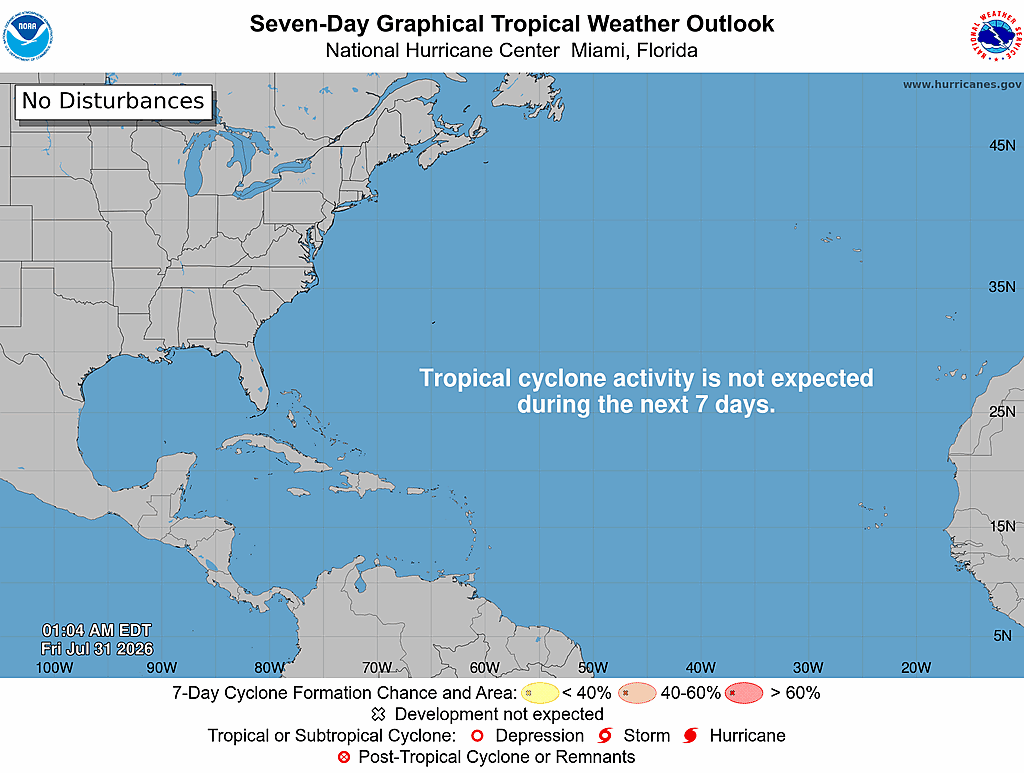
Daily Florida hurricane-season check for July 31, 2026: The National Hurricane Center’s 2:00 AM EDT Atlantic outlook says, exactly, “Tropical cyclone formation is not expected during the next 7 days.” No systems or named areas are being monitored in this issuance. That is welcome news for Florida and the Treasure Coast, but tropical conditions can change, so residents and businesses should keep checking official updates.
Quick Read
- Official issue time: 2:00 AM EDT Friday, July 31, 2026.
- Area covered: The North Atlantic, Caribbean Sea, and Gulf of America.
- Systems or areas being monitored: None listed in this outlook; the current official graphic also shows “No Disturbances.”
- NOAA formation outlook: “Tropical cyclone formation is not expected during the next 7 days.” NOAA does not list separate 2-day or 7-day percentages in this issuance because it identifies no development areas.
- Treasure Coast takeaway: There is no development area identified in this issuance, but hurricane-season readiness should continue in Port Saint Lucie, Jensen Beach, Fort Pierce, Vero Beach, and nearby communities.
Official NOAA/NHC Atlantic Tropical Weather Outlook
The official text product available for this morning’s check reads:
628
ABNT20 KNHC 310504
TWOAT

Tropical Weather Outlook
NWS National Hurricane Center Miami FL
200 AM EDT Fri Jul 31 2026

For the North Atlantic...Caribbean Sea and the Gulf of America:

Tropical cyclone formation is not expected during the next 7 days.

$$
Forecaster Gibbs
Important: This is a snapshot of one official issuance. It is not an all-clear for every type of Florida weather, and it does not guarantee conditions will remain unchanged for seven days. NOAA/NHC can issue updated outlooks as conditions warrant. Use the current official outlook and local emergency-management instructions for decisions.
What This Means For Florida And The Treasure Coast
With no tropical development area identified, today is a good maintenance day rather than a reason to wait. Home users and small businesses can use the quieter period to test the technology and communication plans they may depend on later in the season.
- Homes: Charge phones and power banks, confirm everyone receives emergency alerts, and keep important documents available offline.
- Small businesses: Verify cloud and local backups, payment-system contingencies, staff contact lists, and how you would operate through an internet or power outage.
- Remote workers: Test mobile-hotspot access, VPN connectivity, multi-factor authentication recovery, and spare charging options before severe weather approaches.
- Coastal and flood-prone areas: Follow official evacuation and emergency-management guidance. Technology preparation supports a safety plan; it never replaces one.
A Five-Minute Hurricane-Season Tech Check
- Confirm the last successful backup of essential files, photos, accounting data, and customer records.
- Make sure at least one copy is off-site or in a reputable cloud service—not only on a device in the same building.
- Charge phones, laptops, power banks, UPS units, flashlights, and a weather radio.
- Write down ISP, insurance, IT, utility, and key employee contacts so they remain available if internet service fails.
- Move critical electronics off floors and away from windows or locations vulnerable to water intrusion.
Official Weather And Preparedness Links
- NOAA/NHC Atlantic Tropical Weather Outlook text
- NOAA/NHC 7-day Atlantic graphical outlook
- National Weather Service hurricane preparedness guide
- Ready.gov hurricane preparation guidance
- Florida Division of Emergency Management
Related Reading From The IT Guys
- Make A One-Page Tech Emergency Sheet Before Something Breaks
- Test One File Restore Before You Trust Your Backups
The IT Guys serves Port Saint Lucie, Jensen Beach, Fort Pierce, Vero Beach, and surrounding Treasure Coast communities. This daily article is informational and is not a substitute for NOAA/NHC forecasts, local emergency alerts, or evacuation instructions. Check official sources again before making weather or safety decisions.