

⚠ Urgent Cybersecurity Alert
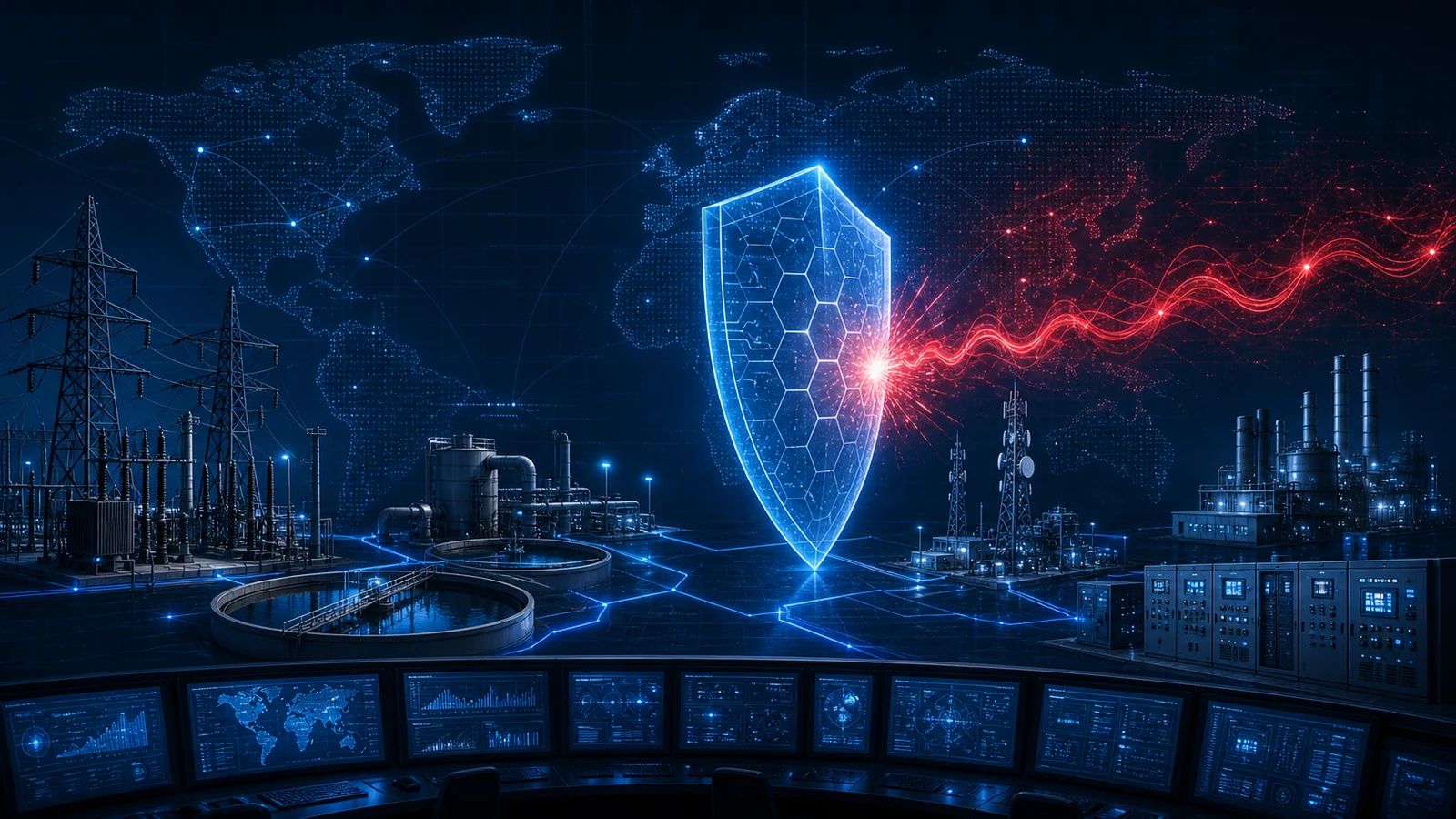
An online channel presenting itself as a voice for Iranian cyber operations has threatened “unexpected and critical events” against American energy, water and telecommunications—and new reporting says Iranian hackers have recently probed those and other U.S. infrastructure sectors. The latest attempts were reportedly unsuccessful, but federal agencies have separately confirmed that Iran-affiliated actors have already disrupted industrial controllers in U.S. critical-infrastructure environments.[1][2]
The bottom line
This is a credible security warning, not proof that America’s grid or water supply has fallen. Do not amplify the attackers’ propaganda by inventing catastrophe. Do not dismiss the threat because the newest attempts failed. Harden exposed systems now.
What was threatened
NBC News reported September 2 that four people with access to government and industry cyberthreat information said Iranian hackers had targeted U.S. water systems, telecommunications, energy and other infrastructure in recent weeks. The attempts focused on automated systems connected to the internet and had so far been unsuccessful.[1]
A Telegram channel called APT IRAN, described in the reporting as presenting itself as a voice for Iranian cyber operations, declared:
“Soon, the United States will witness unexpected and critical events in the energy, water, and telecommunications industries.”[1]
The channel supplied no evidence that it had successfully carried out cyber operations against the United States. That distinction matters: a threat can be operationally important without being treated as verified proof of access or impact.[4]
What we know
- Recent attempts reportedly reached across water, telecom, energy and other infrastructure sectors.[1]
- The newest reported attempts had not caused a major disruption as of the reporting cutoff.[4]
- Federal agencies have confirmed separate Iran-affiliated intrusions into internet-facing programmable logic controllers, or PLCs.[2]
What we do not know
- Public reporting does not identify every targeted operator, location or system.
- The APT IRAN channel has not publicly proved that it controls compromised U.S. infrastructure.[4]
- No public evidence reviewed for this article establishes a nationwide outage, contaminated water supply or collapsed telecommunications network.
Watch the news report
Fox News’ 1-minute, 53-second report was published September 3, 2026. It identifies energy, water and telecommunications as threatened sectors and urges stronger defenses. The video remains hosted by Fox News and is not copied or rehosted here.[3] If the player is blocked, watch it directly on Fox News.
The threat is not just talk
The strongest public evidence comes from the joint federal advisory led by CISA. It says that since at least March 2026, an Iran-affiliated advanced persistent threat group disrupted PLCs used across U.S. government services and facilities, water and wastewater systems, and energy operations. Some victims suffered operational disruption and financial loss.[2]
Agencies observed access to internet-facing controllers manufactured by Rockwell Automation/Allen-Bradley, Schneider Electric and Siemens, with potentially other brands also exposed. The actors used hosted infrastructure and legitimate PLC programming software against misconfigured devices—an ugly reminder that an ordinary exposed control interface can become an adversary’s doorway.[2]
Hands off America’s lifelines
Targeting civilian water, power and communications is not strength. It is coercion aimed at ordinary people who need clean water, working hospitals, emergency calls and reliable electricity. The attackers want fear, headlines and the illusion that every blinking control panel is already theirs. America’s answer should not be online chest-thumping or vigilante retaliation. It should be colder and more effective: expose less, authenticate harder, watch the logs, preserve evidence, isolate intrusions and deny the adversary a foothold.
Threatening families through the systems that keep communities alive is contemptible. Defending those systems is serious work—and it starts before an alarm turns into an outage.
What infrastructure operators should do now
Cut off the easy doorway
- Remove PLCs from direct internet exposure.
- Put remote access behind a controlled gateway, firewall or VPN.
- Use MFA for external access to operational-technology networks.
- Replace default credentials with strong, unique passwords.
Prepare to detect and recover
- Enable and review logs on controllers, gateways, modems, HMIs and connected workstations.
- Create tested offline backups of known-good PLC logic and configuration.
- Patch during controlled maintenance windows and validate project files before restoration.
- If compromise is suspected, preserve evidence and contact CISA, the FBI and the equipment manufacturer.
Those actions summarize the federal advisory; operators should use the full manufacturer-specific guidance and conduct an impact assessment before changing live industrial systems.[2]
What this means for Florida small businesses
Most small businesses in Port Saint Lucie, Jensen Beach, Fort Pierce and Vero Beach do not operate industrial controllers. They can still be hit by the surrounding campaign through phishing, password theft, ransomware, fake emergency notices and compromised vendors. Use phishing-resistant MFA where available, patch internet-facing equipment, verify backups, separate administrative accounts, and confirm alarming requests through a second channel. Our earlier U.S.–Iran conflict protection guide has a practical checklist; our industrial-controller report explains the broader water-system risk.[5][6]
If you see signs of an incident
- Do not erase or “clean up” first. Isolate affected access where operationally safe, preserve logs and system images, and involve qualified incident responders.
- Critical-infrastructure organizations can report the incident to CISA.
- Businesses and individuals can also file with the FBI Internet Crime Complaint Center.
- Do not conduct retaliatory hacking. It can destroy evidence, hit innocent systems and create legal and operational damage.
Sources and reporting notes
- NBC News: “Iran attempted cyberattacks on range of U.S. infrastructure, sources say” — direct reporting by Dan De Luce and Kevin Collier, published September 2, 2026, at 6:00 a.m. EDT.
- CISA and partner agencies: “Iranian-Affiliated Cyber Actors Exploit Programmable Logic Controllers Across US Critical Infrastructure” — joint federal advisory originally published April 7 and updated July 22, 2026.
- Fox News: “Iranian hacking group threatens US infrastructure with cyberattacks” — 1:53 news clip published September 3, 2026.
- Iran International: “Iranian hackers targeted US infrastructure in recent weeks — NBC News” — attributed secondary report published September 2, 2026. It largely relays NBC’s reporting and is not treated here as an independent investigation.
- The IT Guys: U.S.–Iran conflict cybersecurity protection guide — prior practical background.
- The IT Guys: Industrial-controller and water-utility threat report — prior technical context.
Reporting cutoff: September 3, 2026, 12:02 p.m. Eastern / 16:02 UTC. This is a fast-moving security story. “Iranian-affiliated,” “Iranian hackers,” and “APT IRAN” reflect the attribution and self-description used by the cited sources; they are not labels for Iranian civilians or proof that every claimed operation succeeded.