Samsung, SK hynix, and Micron are now facing a federal class-action antitrust lawsuit over alleged DRAM price fixing. The case was filed on June 25, 2026, in the U.S. District Court for the Northern District of California, and it targets the three companies that dominate the global DRAM memory market.
The short version: the complaint alleges that the memory makers used the AI boom and the shift toward high-bandwidth memory, or HBM, as cover while intentionally restricting supply of older mainstream DRAM products such as DDR3 and DDR4. The plaintiffs claim that reduced supply helped push RAM prices sharply higher for consumers, repair shops, PC builders, small businesses, and anyone buying or upgrading computers.
That is the allegation. It has not been proven in court. Micron has publicly denied wrongdoing, and the other companies will have a chance to respond through the legal process. Still, this is a major story because RAM pricing affects almost every part of the computer market: desktops, laptops, servers, mini PCs, workstations, gaming builds, repair quotes, and business refresh cycles.
What Was Filed
The case is listed as Garciaguirre et al. v. Samsung Electronics Co., Ltd. et al. on public docket services. Public docket entries show the complaint was filed June 25, 2026, with plaintiffs including individual consumers and small businesses. The defendants named in public docket references include Samsung Electronics, SK hynix, and Micron Technology.
The docket matters because it gives this story a concrete legal anchor. This is not just a market rumor about RAM prices being painful. It is now a formal civil antitrust case asking a court to examine whether the largest DRAM makers coordinated behavior in a way that harmed buyers.
The Main Allegation
Public reporting on the complaint says the plaintiffs accuse the three companies of coordinating DRAM supply decisions beginning around 2022. The argument is that the companies shifted capacity toward higher-margin AI memory while reducing or phasing down supply for older DRAM products, especially DDR3 and DDR4, in a way that allegedly inflated prices.
There is a legitimate business reason that memory companies would chase HBM: AI servers need it, margins can be better, and demand from data centers has been enormous. The legal question is different. The court will have to examine whether each company made independent business decisions or whether there was unlawful coordination that restricted supply and raised prices.
That distinction is everything. A tight market by itself is not illegal. A manufacturer choosing to prioritize a profitable product line is not automatically illegal. The allegation becomes serious if plaintiffs can show coordinated conduct, communications, market signaling, or a shared plan to restrict supply beyond normal competitive behavior.
Why This Matters To Customers
DRAM is not a niche component. It is the working memory in everyday computers. When DRAM prices rise, the impact shows up in several places at once:
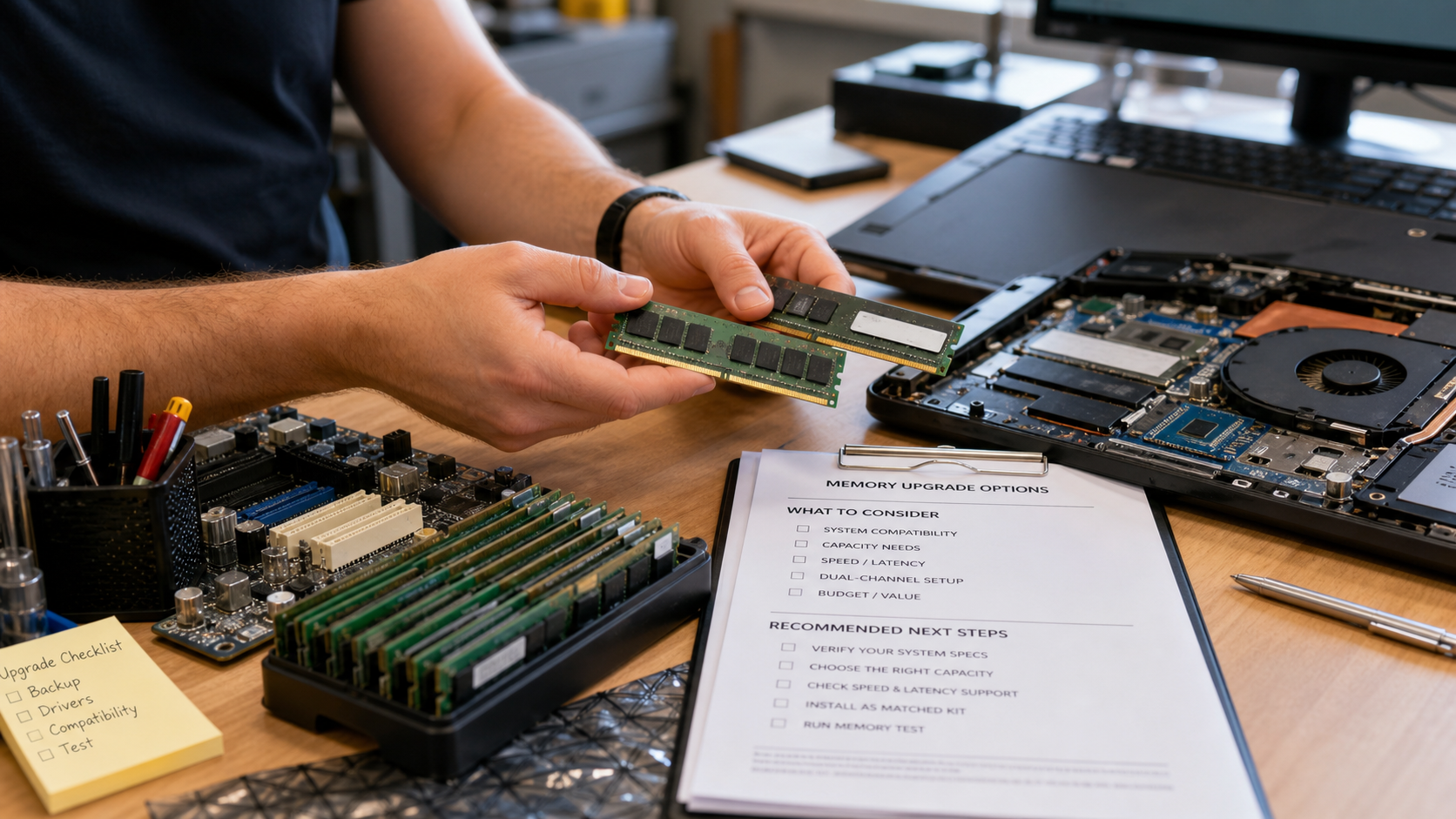
- PC repair and upgrade costs: A simple RAM upgrade can become harder to justify when module prices jump.
- New computer pricing: Laptop and desktop vendors either absorb higher component costs or pass some of them to customers.
- Small-business refresh planning: A company replacing several systems may see a meaningful difference between buying 8 GB, 16 GB, or 32 GB configurations.
- Gaming and workstation builds: Higher RAM pricing changes the balance between CPU, GPU, storage, and memory spending.
- Server and NAS upgrades: Memory-heavy systems get more expensive, especially where ECC memory or larger capacity kits are needed.
For customers around Port Saint Lucie, Jensen Beach, Fort Pierce, and Vero Beach, the practical takeaway is simple: if a quote for RAM, a new PC, or a business workstation feels higher than it did a few years ago, it may not just be local markup. Memory pricing has been under real pressure across the supply chain.
The Five-Year Pricing Picture
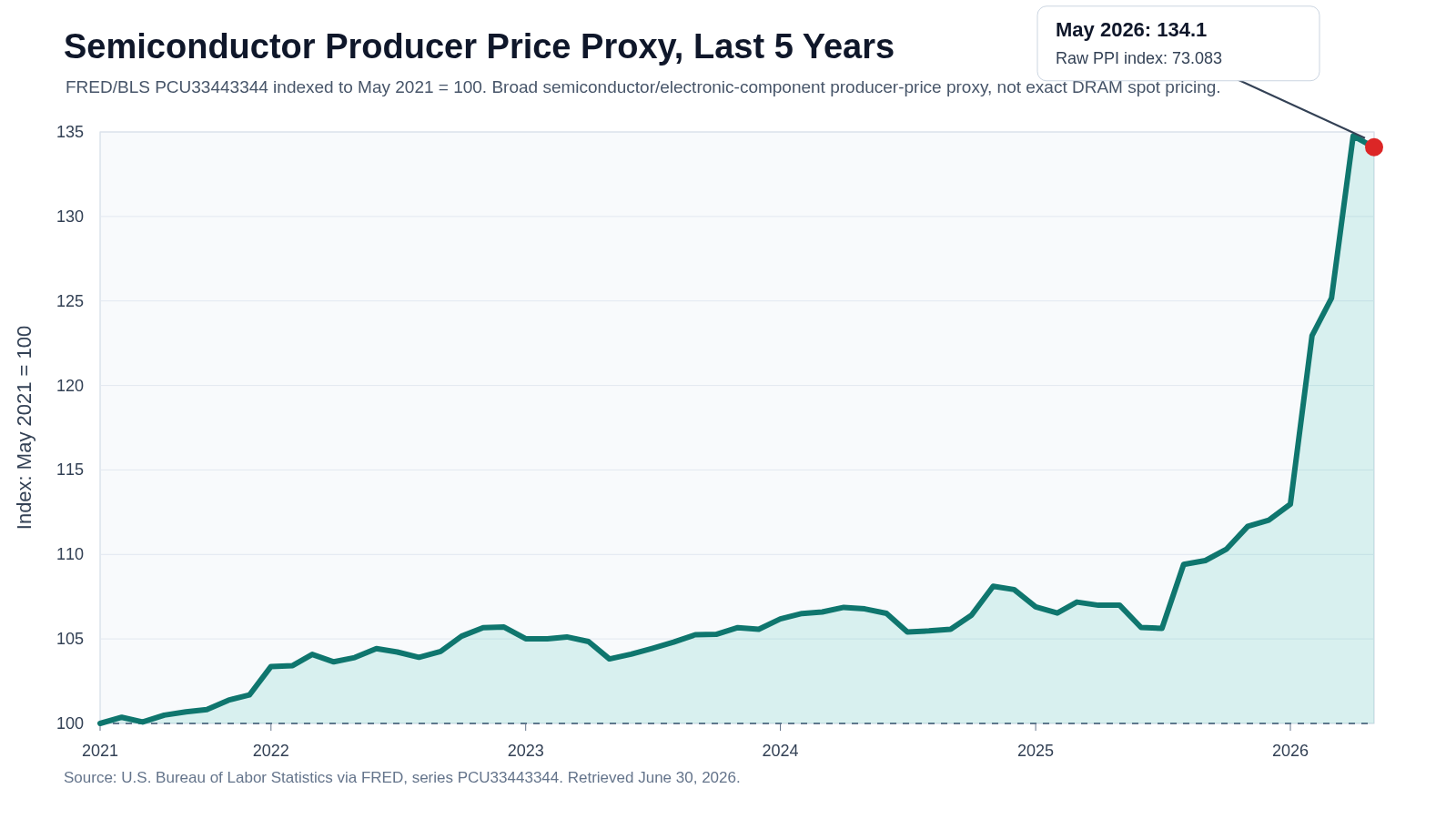
Public, clean, long-term DRAM retail pricing data is messy because module prices vary by capacity, speed, generation, brand, timing, seller, and promo cycle. For a transparent chart, I used the Federal Reserve Economic Data series for the Producer Price Index covering semiconductor and other electronic component manufacturing. It is not a perfect DRAM-only chart, but it is a credible public proxy for the broader semiconductor component price environment.
Using that public PPI series, the indexed price level rose from 54.5 in May 2021 to 73.083 in May 2026, a roughly 34.1% increase over five years. That does not capture every retail RAM spike customers saw at checkout, and it does not prove the lawsuit. It does show that component pricing pressure has been real and measurable.
What The Companies May Argue
The defense side will likely point to normal market forces. AI demand exploded. HBM is technically complex. Fab capacity is expensive and slow to expand. Older DRAM products can become less attractive to manufacture over time. Large customers may sign long-term supply agreements. A company can raise prices during a shortage without that automatically becoming an antitrust violation.
Those are not small arguments. Antitrust cases often turn on evidence of coordination, not just a painful market outcome. If all major suppliers independently move toward a more profitable product because demand changed, that is one story. If plaintiffs can show coordinated restriction of supply, that is a very different story.
Investors Business Daily reported that Micron denied the allegations and said it is committed to lawful and fair competition. That denial is important to include because customers should not treat the lawsuit as a verdict. The case is early, and the companies have not had their full opportunity to answer the complaint in court.
Why The AI Memory Shift Is Central
The timing matters because the AI infrastructure boom changed the memory business. High-bandwidth memory is critical for advanced GPUs and AI accelerators. HBM is stacked, high-performance memory used close to processors that need massive bandwidth. It is not the same product as a regular DDR4 desktop DIMM, but both compete for engineering attention, production planning, and manufacturing capacity.
When a supplier shifts emphasis toward HBM, the ordinary PC market can feel squeezed. DDR4 remains common in many business desktops, older workstations, repair jobs, budget systems, mini PCs, and used/refurbished computers. If DDR4 supply tightens while demand remains steady, prices can rise even though the newest AI systems are using different memory technology.
That is why this story reaches beyond Wall Street. A decision made for AI data centers can ripple down to a customer trying to add 16 GB of memory to a work PC, a local shop quoting a repair, or a small office deciding whether to replace machines now or wait.
The Good And Bad Points Right Now
Good Points
- There is now a formal court process. If the allegations have merit, discovery may bring facts into the open.
- Customers may get clearer explanations for pricing. Even if the companies prevail, the case could force more public detail about supply decisions.
- Market attention may help buyers. When pricing behavior is under a microscope, suppliers and retailers may become more cautious about aggressive increases.
- The issue is visible beyond enthusiast circles. RAM pricing affects ordinary buyers, not just custom PC builders.
Bad Points
- Legal cases move slowly. Customers should not expect RAM prices to drop next week because a lawsuit was filed.
- Allegations are not proof. It may take months or years before the court record is clear.
- AI demand is still real. Even without unlawful coordination, memory supply can remain tight if data-center demand stays hot.
- Older platforms may get squeezed hardest. DDR3 and DDR4 users may have fewer attractive options as manufacturers prioritize newer or higher-margin products.
What Buyers Should Do Now
Do not panic-buy memory just because of the lawsuit. A smarter approach is to match the upgrade to the actual lifespan of the computer.
- If your PC is already memory-starved, upgrade when the price is acceptable. Waiting for a court case to change the market is not practical if the machine is slow today.
- If you are buying a new business PC, choose enough RAM up front. For many modern office systems, 16 GB is the practical floor, and 32 GB is worth considering for heavier multitasking.
- If your system uses DDR3, compare upgrade cost against replacement value. DDR3 upgrades can keep older machines alive, but there is a point where money is better spent on a newer platform.
- If your system uses DDR4, check compatibility carefully. Speed, capacity, rank, voltage, and motherboard support still matter.
- If you are building a gaming or workstation PC, watch total platform cost. A cheap motherboard or CPU deal can be less attractive if the memory kit erases the savings.
For small businesses, the best move is planning. If you know several computers need more memory, quote the full batch instead of buying one stick at a time. If prices are moving, getting a same-day quote matters because component pricing can change quickly.
What We Are Watching Next
The next key steps are the defendants’ responses, any motions to dismiss, class-certification arguments, and whether discovery is allowed to proceed deeply enough to expose internal communications or supply-planning documents. Those are the pieces that can separate a strong antitrust case from a complaint built mostly on market behavior and price movement.
We are also watching whether RAM retail prices soften, stabilize, or keep moving higher through the next few quarters. If AI memory demand continues to absorb capacity, mainstream RAM buyers may still face pressure even if the lawsuit takes years to resolve.
Sources And Further Reading
- PacerMonitor docket: Garciaguirre et al. v. Samsung Electronics Co., Ltd. et al.
- Justia docket entry for the Northern District of California case
- Tom’s Hardware report on the DRAM price-fixing lawsuit
- Investor’s Business Daily report including Micron’s denial
- FRED/BLS semiconductor and electronic component manufacturing PPI data
- BLS explanation of the Producer Price Index
- Ars Technica background on high RAM prices and memory-maker profits
Bottom Line
This lawsuit is worth watching because it sits directly at the intersection of AI demand, consumer PC costs, repair pricing, and small-business technology planning. The allegations are serious, but they are still allegations. For now, the practical move is to buy RAM based on real need, check compatibility carefully, and avoid assuming prices will quickly return to old levels just because a lawsuit has been filed.
If you are unsure whether it makes sense to upgrade memory, replace an older PC, or wait for pricing to settle, contact The IT Guys. We can help compare the repair cost against the value of the system and make sure you are not overspending on the wrong upgrade.