

☀ Morning Good News for Today
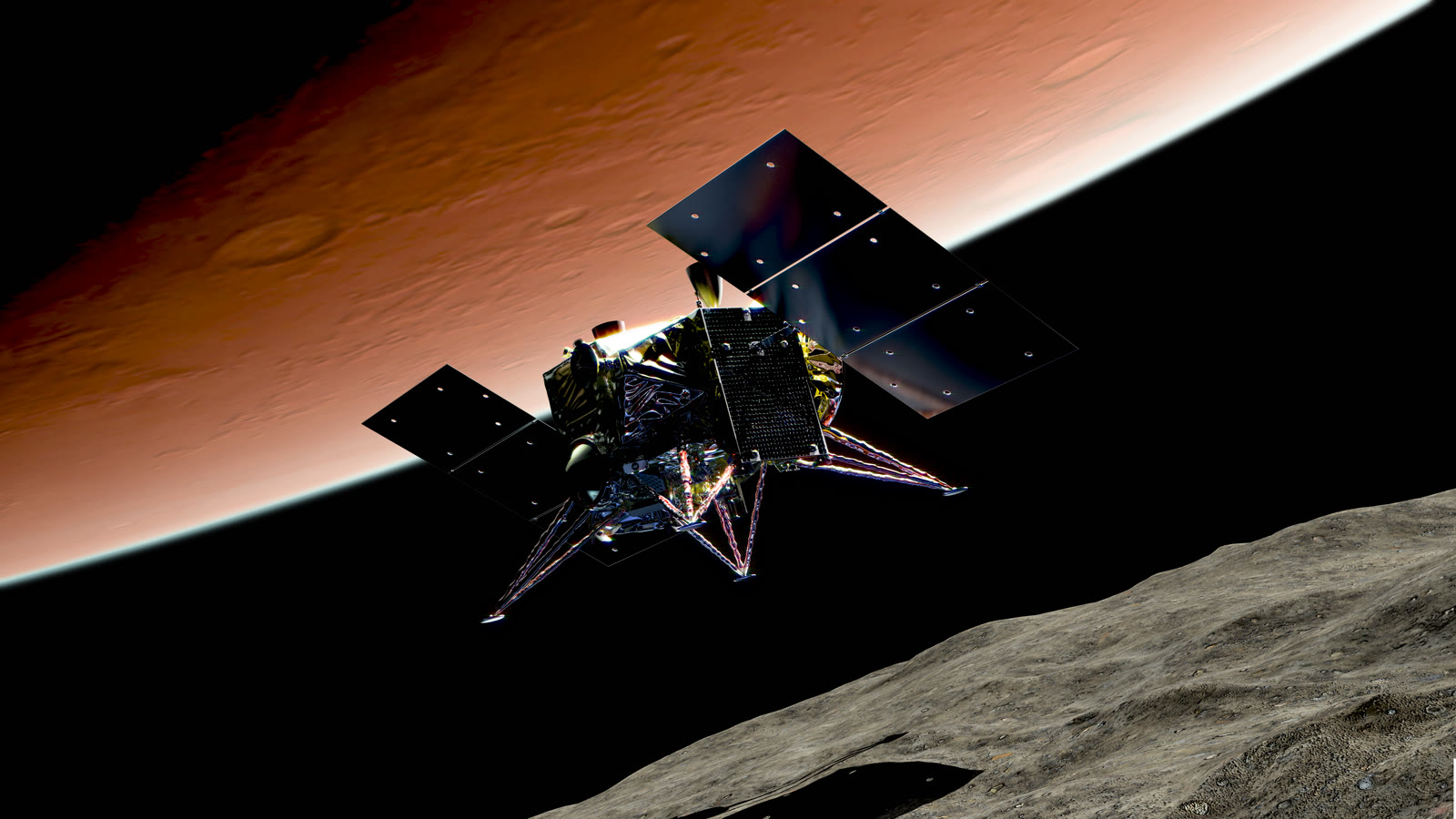
The world’s first-ever mission to bring back samples from a moon of Mars is now in space. The Japan Aerospace Exploration Agency (JAXA) launched its Martian Moons eXploration (MMX) spacecraft at 04:41:03 JST on October 20, 2026 from the Tanegashima Space Center, aboard an H3 rocket. The H3 flew as planned, spacecraft separation was confirmed about 71 minutes after liftoff, and MMX was injected into its planned orbit.[1] [4] [5]
Good news in 30 seconds
- MMX is in space, on its planned orbit, and on schedule to begin orbiting Mars in August 2027.[1] [4]
- It is the first mission ever designed to pick up pieces of a moon of another planet and bring them home.[2] [3]
- Five space agencies are flying hardware or science on it: JAXA leads, with NASA, ESA, CNES, and DLR.[1] [2] [3]
- NASA’s onboard instrument was built at the Johns Hopkins Applied Physics Laboratory, in Laurel, Maryland, with help from Lawrence Livermore National Laboratory.[2]
- The H3 rocket itself just earned its third consecutive successful launch after a 2025 failure — a quieter but real win for reliable access to space.[5]
What happened
JAXA’s MMX mission lifted off from Tanegashima Space Center at 04:41:03 JST on October 20, 2026 aboard H3 Flight No. 10. The rocket “flew as planned” and “separation of the MMX spacecraft was confirmed,” JAXA wrote in its launch result release, with the spacecraft then injected into its planned orbit.[1] The mission is led by JAXA in collaboration with NASA, the French space agency CNES, the German Aerospace Center DLR, and the European Space Agency ESA.[1] [2] [3]
For more than fifty years, missions to Mars have orbited, landed, or driven around the planet. None has brought back a single grain of either of its moons. MMX is engineered to change that — with at least ten grams of Phobos material scheduled to land in Australia in 2031.[3] [4] [5]
It isn’t a single-agency bet. NASA is flying the MEGANE gamma-ray and neutron instrument built by Johns Hopkins APL with Lawrence Livermore National Laboratory, which will measure what Phobos is made of.[2] ESA is flying the deep-space radio link and using its Estrack ground stations to talk to the spacecraft.[3] CNES and DLR built a small German-French rover called Idefix that will roll across the surface of Phobos.[3] [5]
Why this made us smile
The Earth spent an entire morning watching for one signal from a small probe on its way to another world’s moon. The signal came back. The whole thing worked. Sometimes that is the whole story, and it is enough.
What it could mean for everyday people
You will never hold a piece of Phobos in your hand, and that is fine. What you may eventually see — if not from MMX then from the next round of missions it inspires — is a cleaner answer to a surprisingly personal question: how did our solar system’s rocky worlds get their water and their air? Phobos is thought to resemble the carbon-rich asteroids that may have done that work, so a sample from Phobos is, in effect, a sample from the cargo that may have helped life begin here.[4] Closer to home, the H3 rocket itself just racked up a third straight success after a December 2025 failure, and a launcher that has learned to fly reliably is a quietly useful thing for both government science and commercial payloads.[5]
Keep the confetti factual
The capsule carrying Phobos material lands on Earth in 2031, not today — that is the actual milestone to wait for.[3] [4] NASA’s MEGANE measures elemental composition from orbit. By itself it cannot decide whether Phobos is a captured asteroid or debris from a giant impact on ancient Mars — that open question needs the returned samples.[2] ESA’s contribution to MMX is described by ESA as a “Mission of Opportunity” under its science program, so its commitments sit inside an existing program lifetime, not an indefinite one.[3] [5]
One happy thing to carry with you
Five space agencies, five countries, one rocket, and a five-year plan to bring back the first piece of a moon that isn’t our own.
Sources and reporting notes
- JAXA — Launch result of MMX spacecraft aboard H3 Flight No. 10 (October 20, 2026 JST)
- NASA Science — MMX mission page (NASA’s MEGANE instrument, developed by Johns Hopkins APL with LLNL)
- ESA — MMX factsheet (partnership, communications, Estrack ground stations)
- JAXA — official MMX mission site (project overview and timeline)
- AeroTime — “Japan launches mission to bring back first samples from Mars moon Phobos” (October 20, 2026; on-record ESA quote)
How we know: The liftoff time, the ~71-minute separation, and the orbit-injection confirmation come from JAXA’s launch result release and are independently re-stated in the official JAXA MMX site and in AeroTime’s same-day coverage.[1] [4] [5] The five-agency team credit and the instrument, ground-station, and rover breakdown come from NASA’s MMX page and ESA’s factsheet.[2] [3]
Artwork note: The featured image is a JAXA-provided artist’s concept of MMX at Mars, hosted on NASA Science’s website as a US government public-domain work. It illustrates the mission concept; it is not a photograph and does not depict a real spacecraft event.
Authoring transparency: This article was generated locally on the session’s assigned model (GPT-5 via OpenAI, configured for this session) and reviewed by Jennifer Hudsen before submission.