

☀ Morning Good News for Today
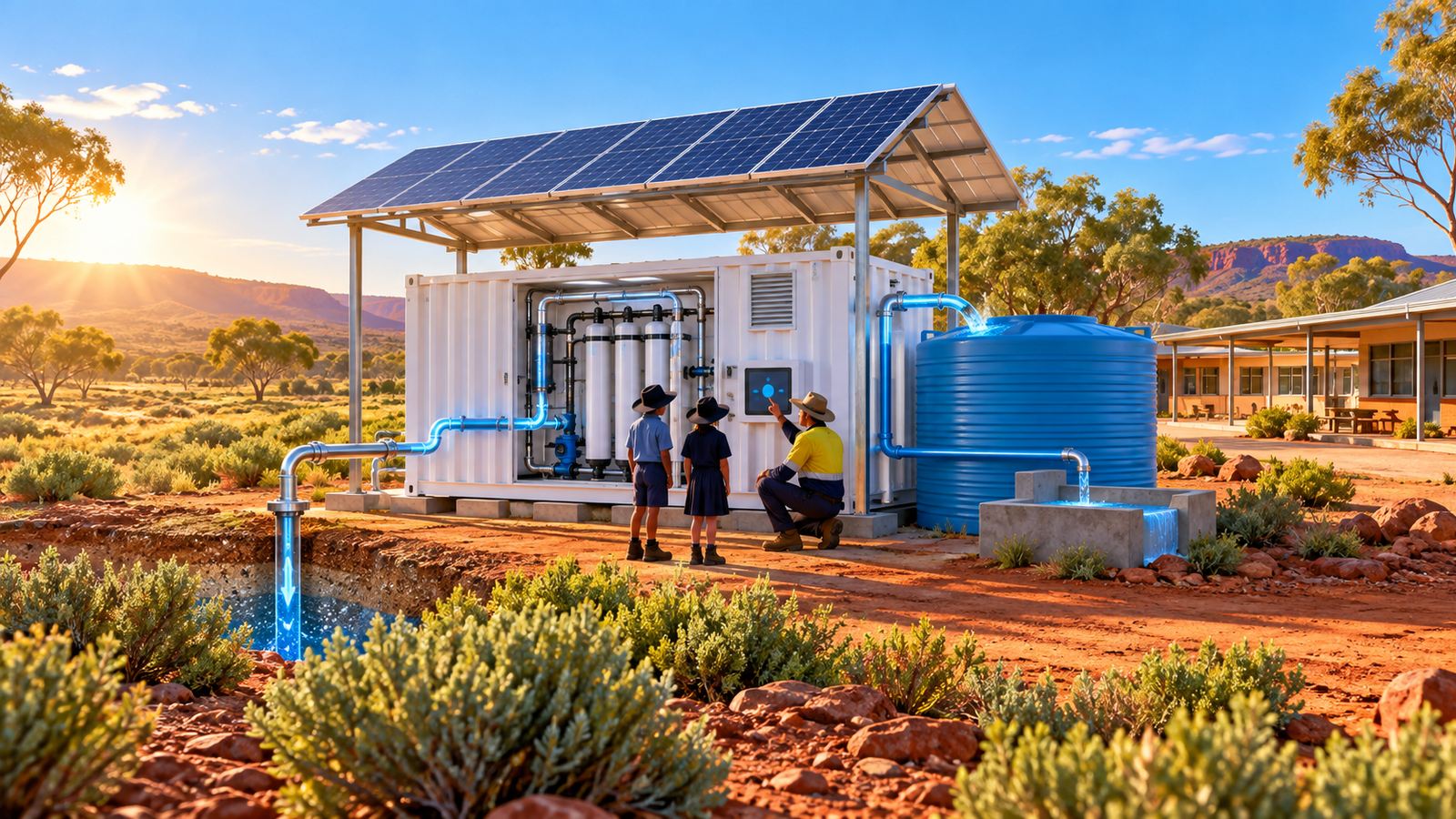
A remote school in Western Australia has a new reason to enjoy the wonderfully boring sound of running water. Murdoch University reports that a solar-powered desalination unit small enough to fit inside a shipping container is now supplying Wongutha Christian Aboriginal Parent-Directed School (CAPS).[1]
Good news in 30 seconds
- Murdoch University says the off-grid unit uses solar panels and batteries to turn salty groundwater into freshwater.[1]
- Wongutha CAPS facilities manager Kris Nostrini said it had supplied more than 7.5 megalitres of water for residents and students by the university’s October 15 report.[1]
- The university says students helped with installation work and now help keep operating logs—so the project supplies both water and hands-on technical experience.[1]
What happened
Wongutha CAPS is an Aboriginal boarding school near Esperance, more than 700 kilometres (about 435 miles) from Perth and beyond the reach of Western Australia’s water grid.[1] Murdoch University says the site’s earlier water source had been declining in both quality and quantity.[1]
Researchers from Murdoch University’s Harry Butler Institute worked with government, water-sector and industry partners on a compact system designed for that setting.[1] Solar panels and batteries power the treatment unit; it draws from multiple local bores, works alongside rainwater collection, and sends rejected saline water to a nearby field of drought-resistant saltbush used as livestock feed, according to the university.[1]
Why this made us smile
The flashiest technology stories usually arrive with lasers, robots or enough acronyms to require their own carry-on bag. This one arrives in a practical white box and performs a heroic task: it helps showers, kitchens and taps keep behaving like showers, kitchens and taps.
Better still, students have helped lay pipe, connect tanks, prepare tank pads and record how the system runs, according to Nostrini.[1] That turns infrastructure from something hidden behind a wall into a living lesson in water, energy and maintenance.[1]
What it could mean for everyday people
For Treasure Coast readers, the useful takeaway is not to copy an Australian installation bolt for bolt.[1] Florida has different water chemistry, regulations, weather and environmental constraints.[1] The broader lesson is familiar to anyone who has planned a backup internet link or a battery system: resilient technology works best when it is sized for the real site, paired with a maintenance plan, and understood by the people who depend on it.[1]
Small, local systems can complement large networks when distance or local conditions make a one-size-fits-all design impractical.[1] That is an encouraging engineering habit, whether the resource flowing through the pipes is water, electricity or data.[1]
Keep the confetti factual
Murdoch University and named Wongutha CAPS staff are the substantive sources for the unit’s present operating state and output figure.[2] We found an exact-title Tech Xplore page, but it identifies Murdoch University as the provider rather than adding independent verification.[2] No meaningful independent report confirming the Wongutha-specific numbers was found before our cutoff.[2]
The university report does not provide independent water-quality test results, detailed operating costs, energy production, uptime, maintenance burden or long-term soil and brine-monitoring results.[1] It also does not prove this design will be suitable or economical in every remote community.[1] Those are important questions for the wider demonstration program—not reasons to drain the happiness from what is already working at this school.[1]
One happy thing to carry with you
Good engineering does not always look futuristic.[1] Sometimes it looks like local sunlight, salty groundwater, a well-designed box and students learning how to keep the whole thing humming.[1]
Sources and reporting notes
- Murdoch University — “Small-scale desalination technology could be the answer to water security in remote Australia” (published October 15, 2026; modified October 15, 2026). This is the primary source and contains statements from Murdoch University researchers and Wongutha CAPS staff.
- Reporting-method note: Before the cutoff, we checked the exact-title Tech Xplore result, Scimex’s listing, relevant Australian government remote-water pages, The IT Guys corpus and the series ledger. Tech Xplore traced back to institution-supplied material; the other pages did not independently verify the Wongutha-specific operating or output claims.