

Consumer Scam Alert
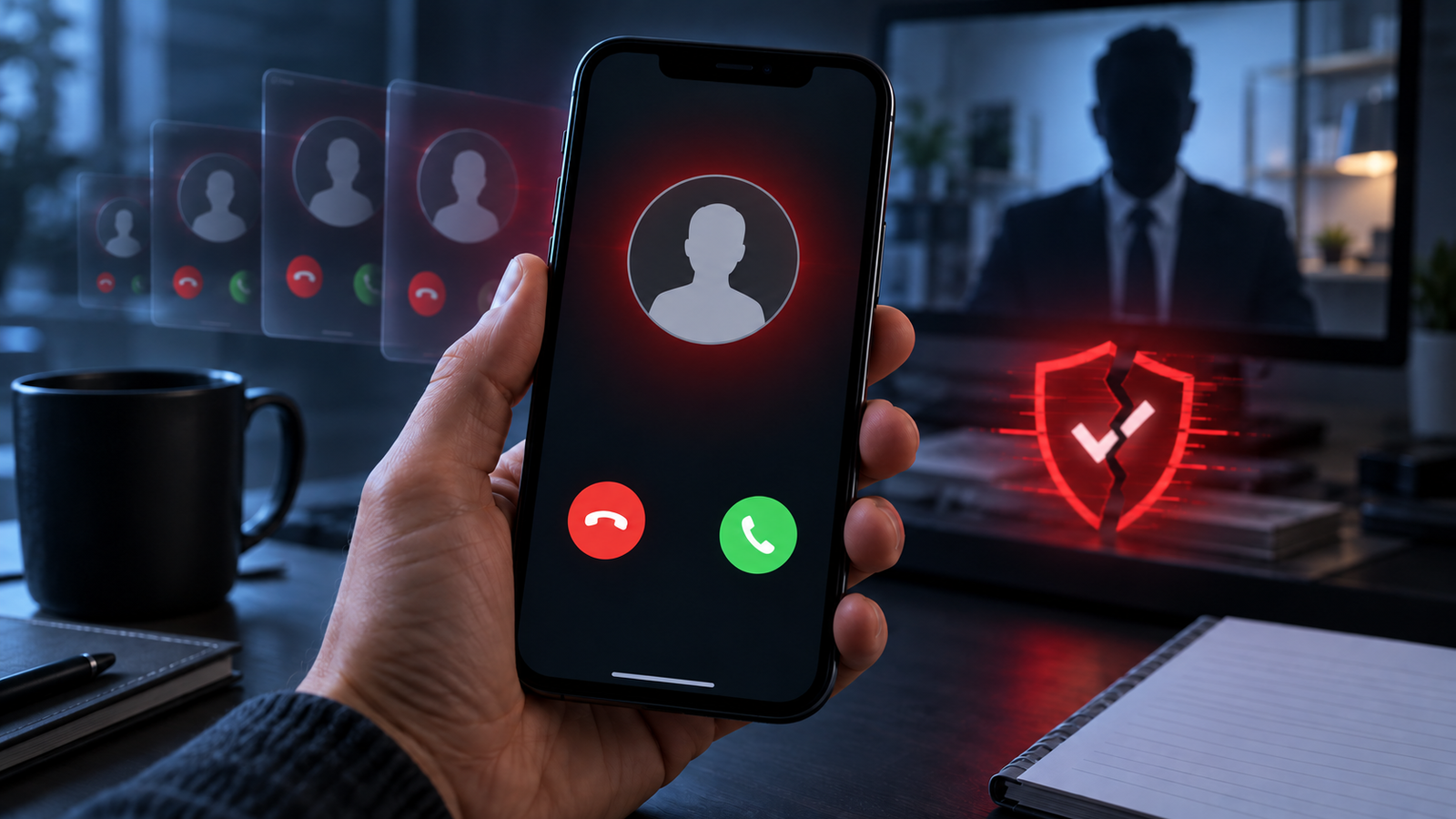
The FBI is warning about a more convincing version of the government-impostor phone scam: criminals can spoof a real agency number, use a real agent’s name, and even stage an official-looking video call. Those details may check out individually while the person contacting you is still a fraudster.[1]
The one rule to remember
Do not send money or sensitive information because an unexpected caller says they are a federal agent. Hang up, find the agency’s number yourself on its official .gov website, and ask whether that specific agent is genuinely trying to reach you about that specific matter.[1][2]
First, a fact-check on the viral headline
The headline saying the FBI warned “every American with a phone” came from Yahoo Finance/Moneywise—not from the FBI. The underlying September 29 notice came from FBI Newark and described reports from victims in New Jersey. It called the scheme an old fraud with an “insidious new twist,” not an entirely new crime. And the FBI said the twist makes it extremely difficult for potential victims to verify whether they are being targeted; it did not say the criminals are “extremely tough to catch.”[1][8]
That narrower origin does not make the danger local. A separate nationwide FBI/IC3 bulletin issued September 17 described widespread law-enforcement and government-impersonation schemes using calls, texts, email, spoofed identities, pressure tactics, and sometimes AI-assisted video impersonation.[2]
These are reported complaints and losses, not a complete count of victims. IC3’s 2025 annual report lists $797,943,193 in government-impersonation losses for that calendar year.[2][3]
How the scam works
- The hook: An unexpected caller may claim to represent your bank and say your identity was used in a crime, or may immediately claim to be an FBI, DEA, Secret Service, court, licensing-board, or foreign-government official. Other versions arrive by text or email.[1][2]
- Borrowed authority: The caller ID may display a real agency field-office number. The criminal may use the name of a person who actually works there, provide fabricated credentials, or display an official-looking office, uniform, seal, or video background.[1][2]
- Fear and isolation: The story may involve arrest, prosecution, missed jury duty, a suspended professional license, extradition, or a compromised account. The caller may insist that you stay on the line and tell nobody—not family, your bank, police, or coworkers.[2]
- The extraction: The scammer demands money or sensitive information through prepaid cards, a courier, bank wire, cryptocurrency, cash, or a crypto kiosk.[2]
Why the usual “I’ll verify your name” check can fail
Suppose “Agent Jane Smith” calls from a number that appears to belong to an FBI office. You look up the office independently and ask whether Jane Smith works there. The answer may truthfully be yes—because the scammer deliberately borrowed a real employee’s identity. You verified employment, not the caller.[1]
The Federal Communications Commission warns that you may not immediately be able to tell whether an incoming call is spoofed. A familiar caller-ID name or legitimate-looking number is therefore a clue, not proof of identity.[4]
Red flags that should end the conversation
Threats and pressure
- Pay now or be arrested, prosecuted, deported, or lose a license.
- Stay on the line while withdrawing or moving money.
- Do not tell relatives, your bank, local police, or anyone else.
- Refuse to let you end the call and verify the story independently.
Unusual payment or access
- Gift or prepaid cards.
- Cryptocurrency or a crypto ATM/kiosk.
- A courier collecting cash.
- Bank wires, account credentials, or Social Security information.
The FBI’s nationwide guidance is categorical: law enforcement and government authorities will not contact members of the public by telephone or text to demand payment or request personal or sensitive information, and they will not demand payment by prepaid card, cryptocurrency, or courier.[2]
How to verify safely
- End the original contact. Do not let the caller keep you on the line while you “verify.”
- Find the agency independently. Type its known official address or use a verified
.govpage. Do not use a link or phone number the caller supplied. - Ask about the specific contact. Confirm more than the employee’s existence.
- For a purported FBI contact, call 1-800-CALL-FBI (1-800-225-5324). FBI Newark lists that number as a way to reach a real FBI representative.[1]
- Inspect web addresses. Lookalike domains may swap letters or use
.comwhere an agency uses.gov.[2] - Bring in another person. Secrecy is a weapon. A trusted relative, financial institution, local police department, or IT professional can slow the situation down and spot contradictions.
If you already paid or shared information
Do immediately
- Stop all contact with the scammer.
- Call the affected bank, card issuer, wire service, payment app, gift-card company, crypto exchange, or ATM operator using an official number.
- Report the transaction as fraud and ask whether it can be recalled, reversed, or refunded. Recovery is not guaranteed.
- If you exposed a username and password, create a new strong password, change it anywhere else it was reused, and enable two-factor authentication.
- If the scammer accessed your computer or phone, update its security software, run a scan, and remove anything the scan identifies as a problem.
Preserve evidence
- Phone numbers, email addresses, usernames, and website links.
- Texts, emails, voicemails, and video-call screenshots or recordings.
- Bank details, crypto wallet addresses, receipts, transaction IDs, and amounts.
- The story used, claimed agency, employee name, badge number, and timeline.
IC3 says victims should immediately cease contact, notify financial institutions, contact local law enforcement, file at IC3.gov, and retain financial records and communications. The FTC provides payment-specific recovery instructions and IdentityTheft.gov provides a recovery plan when personal information was exposed or misused.[2][5]
Where to report it
| Situation | Official destination | What to include |
|---|---|---|
| Internet-enabled or phone impersonation fraud | IC3.gov | Contact details, payment data, messages, URLs, crypto addresses, and retained records. |
| FBI tip or staged video-call evidence | tips.fbi.gov or 1-800-CALL-FBI | Photos, recordings, claimed identities, and the timeline. |
| Consumer fraud | ReportFraud.ftc.gov | How contact occurred, what was requested, and any loss. |
| Identity theft or exposed personal data | IdentityTheft.gov | Create an Identity Theft Report and personalized recovery plan. |
| Caller-ID spoofing or unwanted calls | FCC Consumer Complaints | Report the spoofed or unwanted call through the FCC’s official complaint portal. |
| Victim age 60 or older | DOJ National Elder Fraud Hotline: 1-833-FRAUD-11 | Open Monday–Friday, 10 a.m.–6 p.m. Eastern, according to DOJ.[7] |
What the loss numbers mean—and what they do not
The FBI/IC3 reported nearly 61,000 law-enforcement or government-impersonation complaints and more than $1.6 billion in losses from January 2025 through July 2026. Within that period, missed-jury-duty or court-date stories accounted for 6,833 complaints and nearly $36 million; medical-practitioner targeting accounted for 3,322 complaints and more than $37 million; and schemes impersonating foreign authorities or diplomatic officials accounted for 1,809 complaints and more than $140 million.[2]
The FTC separately reported about $920 million in government-impostor losses during calendar 2025. That is a different reporting system with different categories and intake channels, so it should not be added to IC3’s total or treated as a contradiction.[6]
Frequently asked questions
Can a real FBI number appear on a scam call?
Yes. Caller-ID spoofing can make a fraudulent call display a legitimate agency number. Hang up and place a new call to a number you independently obtained from the agency’s official website.[1][4]
What if the name and badge number belong to a real agent?
That still does not authenticate the caller. Ask the real office whether that specific employee is trying to reach you about that specific matter. A criminal can copy a public employee name and fabricate credential details.
Will the FBI demand payment, gift cards, crypto, or cash by phone?
No. The FBI’s guidance says federal law enforcement will not call or text to demand payment, and government officials will not request prepaid cards, cryptocurrency, or courier payment.[2]
Does an official-looking video call prove anything?
No. FBI Newark reported a fraudster staging an FBI-like office background, and the broader IC3 alert says AI can make video impersonation more convincing. Treat visuals as unverified until the agency confirms the specific contact through an independently placed call.[1][2]
Should I call back the number shown on caller ID?
No. Look up the official number yourself because the number displayed on your screen may be spoofed.[4]
Unsure whether a call, text, or computer alert is real?
Stop before paying, clicking, installing software, or granting remote access. The IT Guys helps residents and small businesses in Port Saint Lucie, Jensen Beach, Fort Pierce, and Vero Beach examine suspicious messages and secure affected devices. We cannot authenticate federal investigations, but we can help you preserve evidence, identify technical compromise, and reach the correct official reporting channels.
Sources and verification
- FBI Newark: “FBI Newark Issues Warning About Insidious New Twist on an Old Fraud Scheme”, September 29, 2026.
- FBI Internet Crime Complaint Center: “Scammers Impersonating Law Enforcement and Government Officials in Fraud Schemes”, September 17, 2026.
- FBI/IC3 2025 Annual Report.
- Federal Communications Commission: Spoofing and Caller ID guidance.
- Federal Trade Commission: What To Do if You Were Scammed.
- FTC: 2025 imposter-scam loss data, June 15, 2026.
- U.S. Department of Justice: elder-fraud help and reporting.
- Yahoo Finance/Moneywise headline that prompted this fact-check, October 3, 2026.
Reporting cutoff: October 5, 2026 at 2:38 p.m. EDT (18:38 UTC). Statistics are reported complaint and loss figures from the named agencies; they are not a complete census and should not be combined across systems. This article provides scam-prevention guidance, not legal or financial advice.