

☀ Morning Good News for Today
Google’s September Android update adds two accessibility tools aimed at making phones easier to use in motion and easier to use for blind and low-vision people. [1] [2] Motion Assist is available on Android 17, while Guided Vision is described as “coming soon” to Android 9 and newer in countries where Gemini is available—not as universally available today. [1]
Good news in 30 seconds
- Motion Assist places customizable moving bubbles over the display to reduce the visual-and-physical mismatch that can contribute to motion sickness while riding in a vehicle. Google says it works on phones using Android 17. [1] [2]
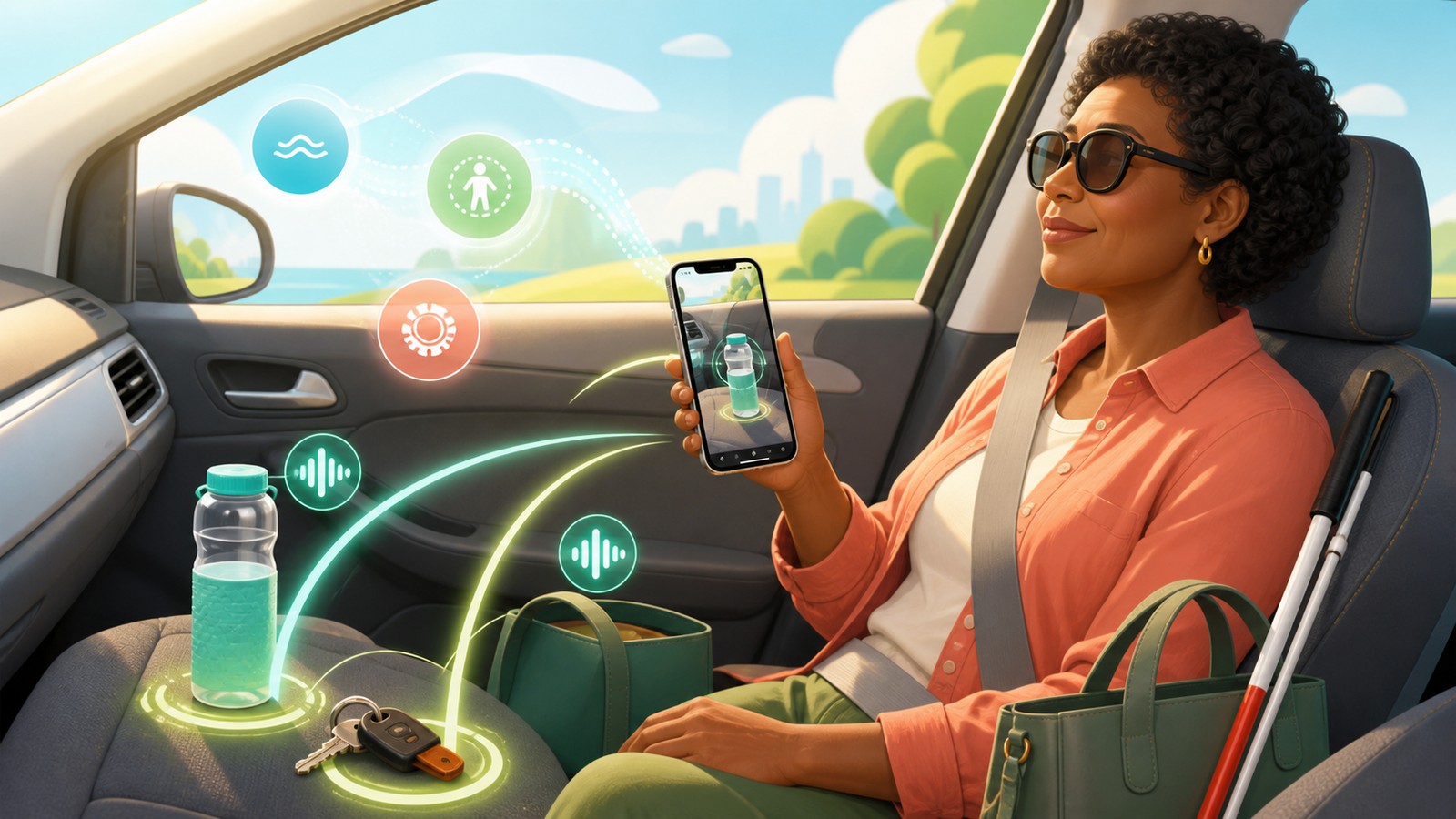
- Guided Vision uses a phone camera and Gemini to describe surroundings and can give spoken framing directions such as panning or centering an object. Google says it was designed for and with blind and low-vision communities. [1]
- Guided Vision is planned for Android 9 and newer where Gemini is available, but Google did not give an exact rollout date in the announcement. [1]
What happened
Google announced its September Android Drop on September 1. The broader release contains five features, but the encouraging center of the story is accessibility: one tool for people who feel motion sickness while looking at a phone in a moving vehicle, and another intended to help blind and low-vision users understand objects and scenes through spoken guidance. [1] TechCrunch independently reported the same availability boundaries and feature descriptions. [2]
The on-screen bubbles respond to a vehicle’s movement. Users can place the control in Quick Settings, enable it automatically, and adjust bubble shape, color, and opacity. [1] This is meant for passengers—not a green light to operate a phone while driving.
Google gives examples such as reading fine print on a food label, viewing a menu in low light, and identifying household objects. If the camera is poorly aimed, spoken feedback can ask the user to reframe, pan, or center the object. [1]
Why this made us smile
Accessibility improvements are at their best when they solve ordinary moments: reading a label, finding the right object, or getting through a car ride without your screen starting an argument with your inner ear. These are not moonshot promises; they are practical attempts to remove friction from daily life.
What it could mean for everyday people
If Motion Assist works well for an individual passenger, it may make reading or watching a screen during a ride more comfortable. Guided Vision may add another hands-free source of descriptive help for eligible users. Those are possibilities, not guaranteed outcomes: needs vary, Gemini availability is country-dependent, and camera-based AI can misunderstand a scene.
Keep the confetti factual
This is a product rollout announcement, not an independent clinical study or proof that Motion Assist prevents motion sickness for everyone. We also have not independently tested Guided Vision’s accuracy, privacy behavior, battery use, or performance across devices. Google says Guided Vision is coming soon, so readers should check their own phone, Android version, accessibility settings, and regional Gemini availability rather than assuming it is already installed. [1] TechCrunch notes that Apple introduced a similar motion-cue concept in 2024, so the basic idea is not new—even if wider availability is still welcome. [2]
One happy thing to carry with you
Good accessibility engineering often looks like this: fewer barriers in small, real moments. A calmer car ride and better spoken guidance are two worthwhile steps.