

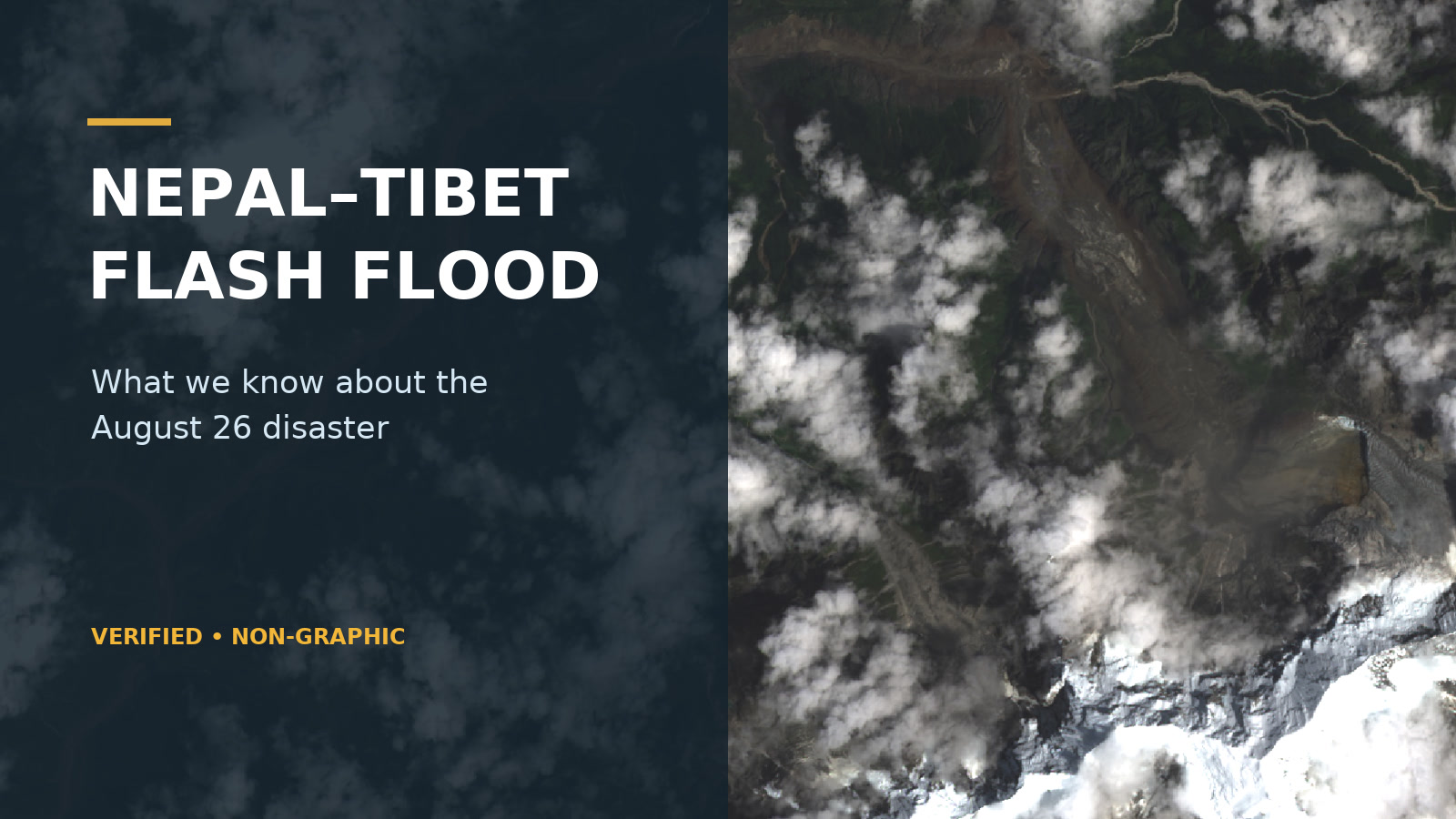
Breaking-news reporting cutoff: August 28, 2026 at 4:14 p.m. EDT. Death and missing-person figures may change as rescuers reach isolated areas and authorities reconcile lists.
A catastrophic wall of water, mud, rock and ice tore through Himalayan communities along the Nepal–Tibet border on August 26. Hundreds have died, thousands are unaccounted for, and rescue teams are still searching damaged valleys, tunnels and settlements.
First, an important correction: this was not an ocean tsunami
Survivors described the impact as “like a tsunami,” and the phrase “mud tsunami” has appeared in some coverage. The event was a catastrophic flash flood in the Himalayas. Scientists’ leading explanation is that bedrock beneath a glacier collapsed, taking ice and rock with it and forcing an enormous surge into river valleys below. The precise trigger remains under investigation.
Latest attributed figures
Those jurisdiction-specific figures come from The Associated Press’s report, modified at 3:23 p.m. EDT. AP also notes that Nepal Police separately reported 553 deaths after the disaster authority reported 579. That discrepancy is one reason every number in this article is attributed and time-stamped rather than presented as final.
Where the flood hit
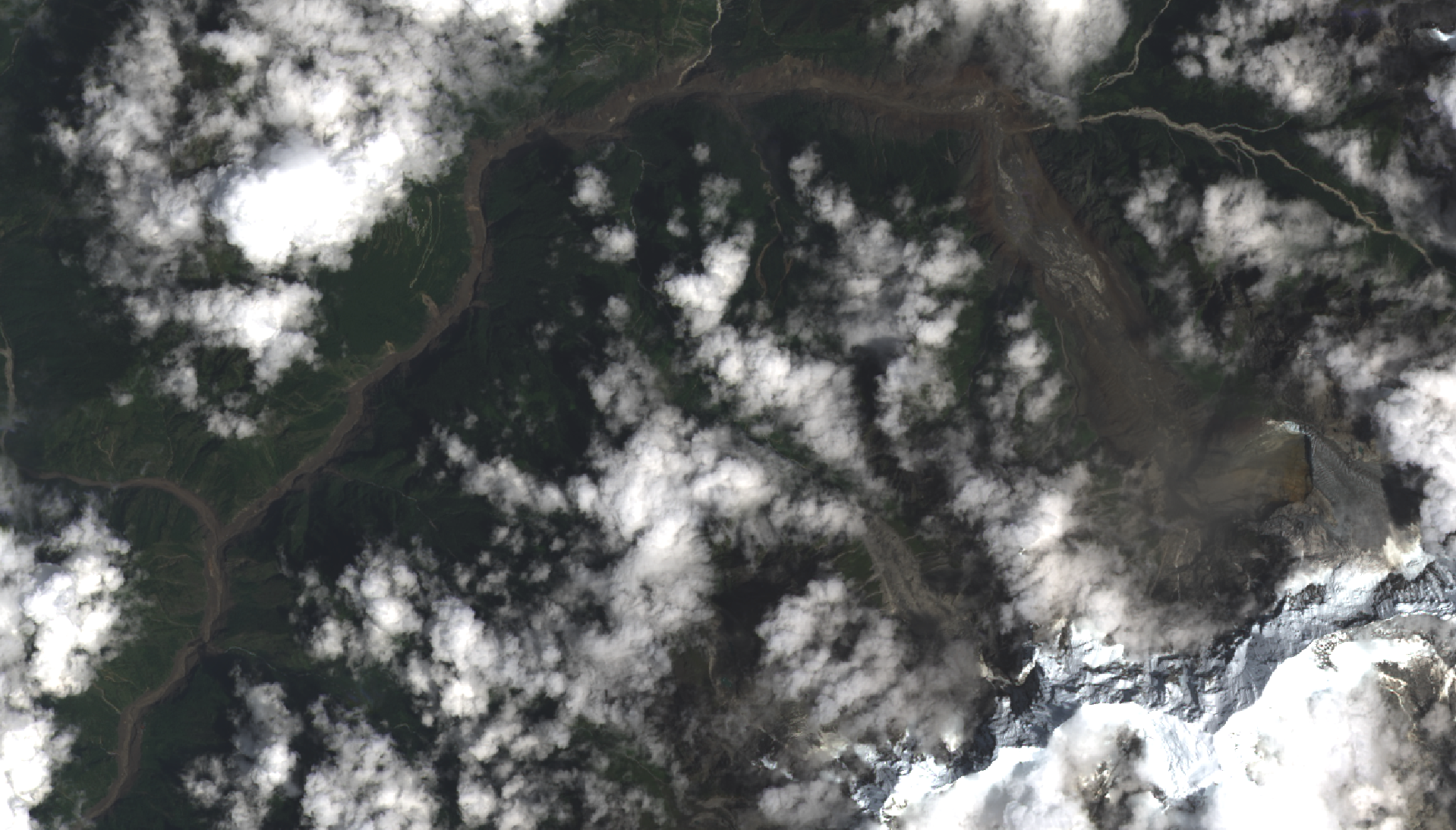
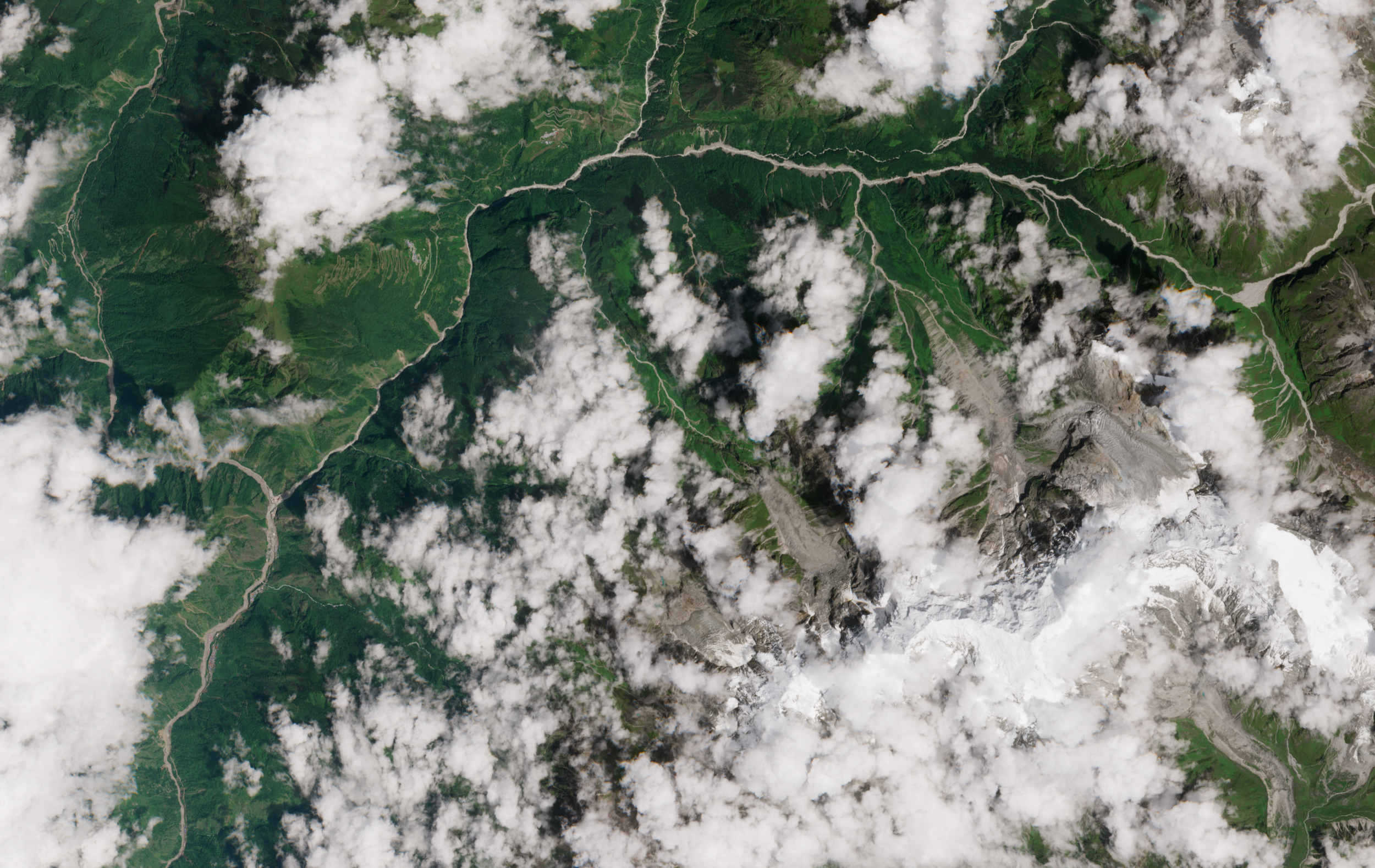
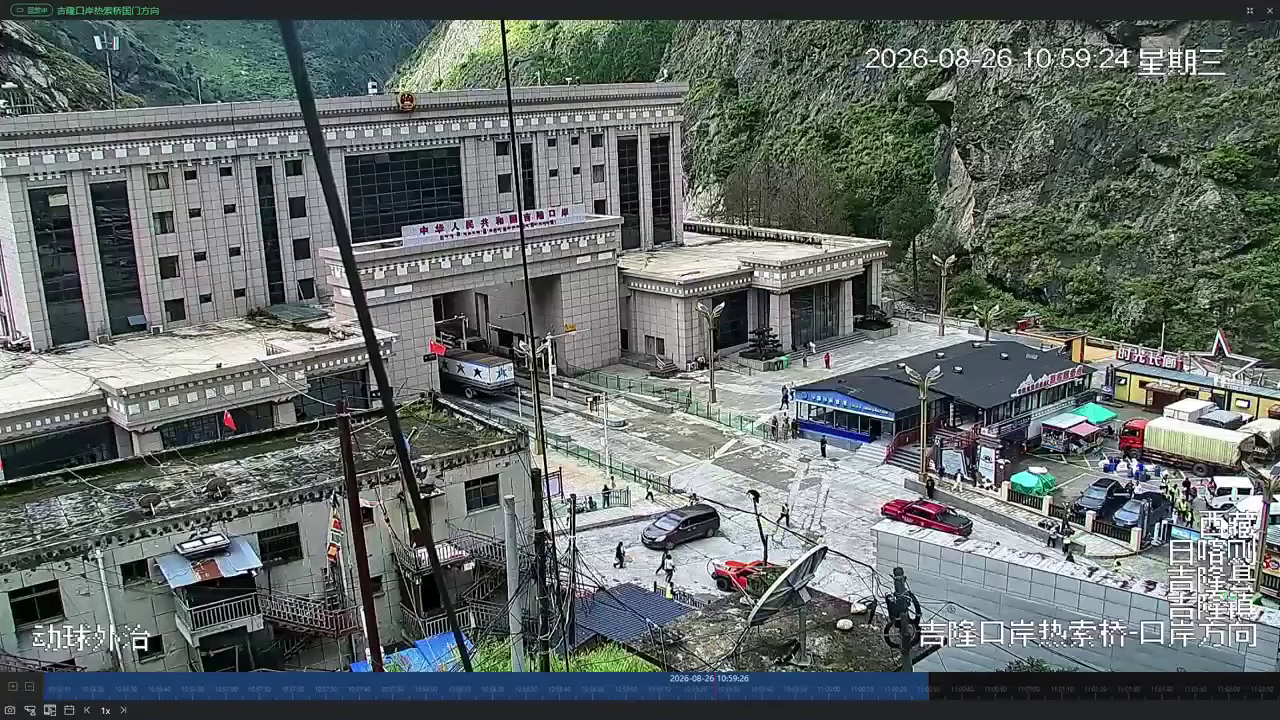
AP places the disaster high in the Himalayan border region near Gyirong County in Tibet and Nepal’s Rasuwa district. The surge raced through the Bhote Koshi/Trishuli river system, damaging communities and infrastructure in Rasuwa and Nuwakot and carrying destruction far downstream. An ABC News analysis of verified video and satellite imagery traced damage at least 62 miles downriver from the border.


What scientists believe happened
Satellite analysis cited by AP indicates that bedrock beneath a glacier collapsed and carried part of the glacier downhill. The mass movement was powerful enough to register as a magnitude-5.2 landslide signal recorded by the U.S. Geological Survey. Rock, ice and meltwater then entered the valleys and swelled the rivers into a destructive torrent.
This is the leading explanation—not a completed forensic finding. Investigators still need to determine what destabilized the slope and how the sequence developed.
Rescue operations and the remaining threat
AP reports that Nepali and Chinese teams have used helicopters, earthmoving equipment, drones and rope access to reach survivors. Work was briefly interrupted by concern over a new lake formed by debris blocking water upstream. Reuters reported Friday that rescue operations resumed after monitoring indicated the immediate lake threat was manageable, although authorities continued watching the area.
AP reports that hundreds of foreign tourists, workers and pilgrims are among those listed as missing. “Missing” or “unaccounted for” does not automatically mean confirmed dead, and the totals may fall as communications and official lists are reconciled.
Source-verified video coverage
Viewer note: These reports show a fast-moving flood and severe destruction and refer to deaths and missing people. We performed dense interval and scene sampling across both clips; no bodies, severe injuries or graphic close-ups were visible in the sampled frames. Any casualty figures appearing inside the earlier footage reflect its publication-time snapshot—use the newer, attributed figures at the top of this article.
Reuters: aerial view of flood devastation
Short aerial footage published by Reuters. Dense sampling examined 159 chronological frames across the 39.8-second clip. Open directly on YouTube.
CNN-News18: fixed-camera view of the flood
This 89.6-second CNN-News18 report shows fixed-camera footage as floodwater and debris enter the area. Dense sampling examined 179 chronological frames; the audio track contains music rather than spoken casualty narration. Open directly on YouTube.
How readers can help without spreading harm
- Use official government, embassy and recognized relief-agency channels for missing-person information. Nepal established an emergency control room for search, rescue, information verification and consular assistance, according to ABC News.
- Editorial recommendation: Do not repost unverified victim lists or graphic footage; families deserve accuracy and privacy.
- Verify the exact domain and charity registration before donating. The U.S. Federal Trade Commission’s charity guidance recommends researching organizations and checking how donations will be used.
- People in affected areas should follow local evacuation orders. AP reports that authorities urged people in potentially affected areas to move to safer ground while the upstream lake was being monitored.
A message from The IT Guys
The IT Guys sends our deepest condolences, hopes and prayers to every family mourning a loved one, everyone waiting for news of someone missing, the injured and displaced, and all communities affected across Nepal and Tibet.
We are also thinking of the rescuers, medical teams, volunteers and neighbors working in extraordinarily dangerous conditions. May survivors be reached quickly, may families receive truthful answers, and may the affected regions receive the help needed for rescue and recovery.
Sources and verification
- Associated Press — latest casualty, missing-person, rescue and lake-risk update
- Associated Press — August 28 live-update archive
- Reuters — rescue resumed as immediate lake threat eased
- U.S. Geological Survey — magnitude-5.2 landslide event record
- ReliefWeb — Nepal Flood Response Situation Report #1
- International Charter Space and Major Disasters — Nepal flood activation
- ABC Australia — verified maps, photos and videos
- Associated Press — verified photo gallery (linked; photos not copied)
- U.S. Federal Trade Commission — charity research and donation-scam guidance