

☀ Morning Good News for Today
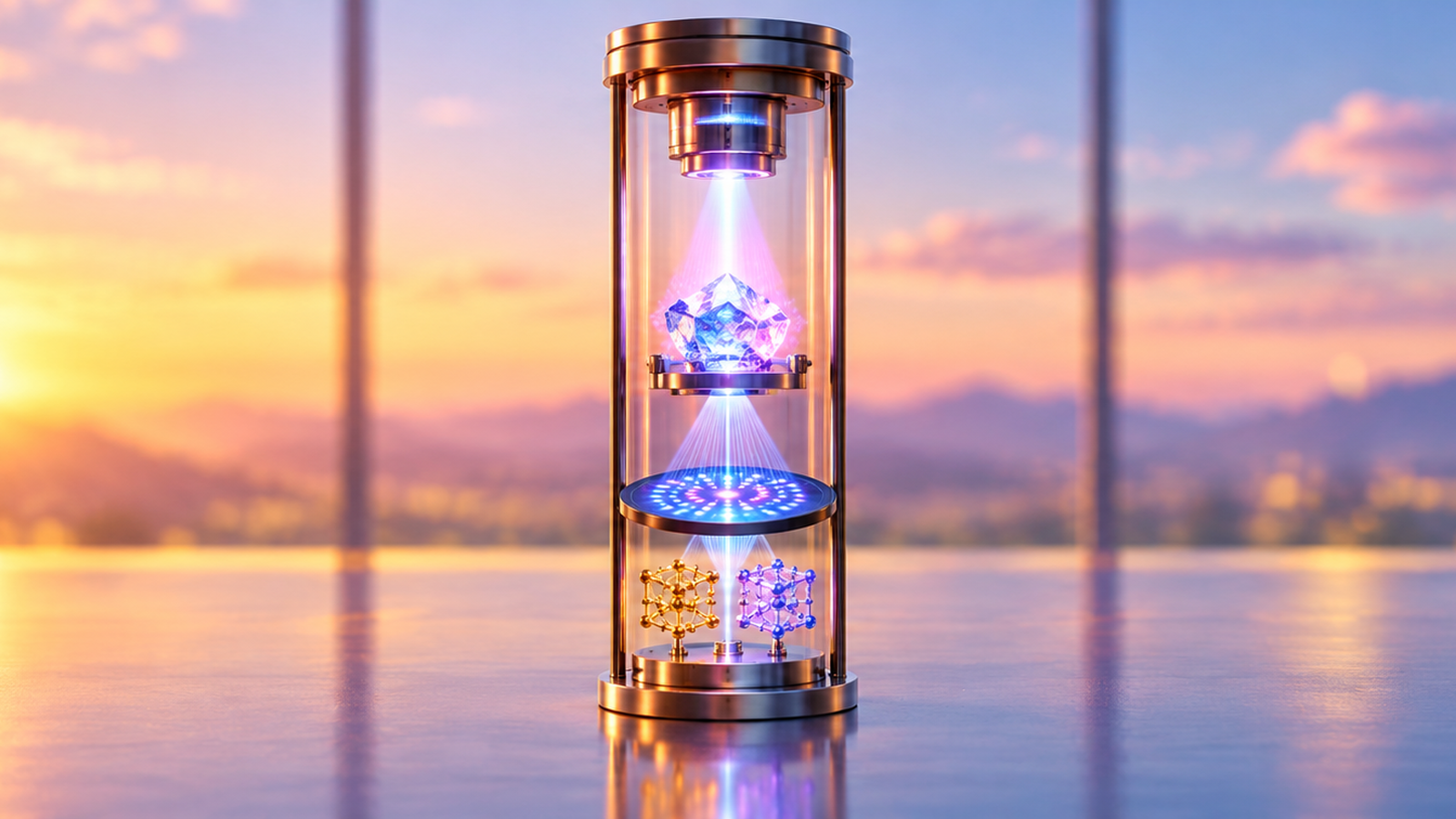
Arizona State University says its compact X-ray light source has completed its latest commissioning experiments and is now open for research experiments.[1] The result turns a room-sized research instrument into an ultrafast camera for watching a material change.
Good news in 30 seconds
- ASU says the team used ultrafast X-ray pulses to follow a laser-driven phase transition in 1T-tantalum disulfide from picoseconds to nanoseconds.[1]
- The university says the completed result comes from the compact X-ray light source, the first of two planned instruments at ASU X-Beams.[1]
- The next stated objective is to study time-resolved dynamics in protein crystals.[1]
What happened
ASU reports that the latest commissioning experiment synchronized an X-ray beam and an infrared laser at a sample, then tracked how the material’s structure changed over time.[1] ASU describes the work as the first time-resolved quantum-dynamics studies produced by a compact X-ray instrument; that “first” remains the university’s characterization because no independent technical confirmation was found before publication.[1][2]
Why this made us smile
The atoms did not pose for the camera. The camera simply learned to be unimaginably quick.
What it could mean for everyday people
Practical reader takeaway: this is research infrastructure, not a finished medical, semiconductor, energy or consumer product. ASU says the broader facility is intended for outside scientific users and that protein-crystal dynamics are a next objective.[1] The everyday value today is a new place where researchers may be able to study fast material and molecular changes—not a product result already delivered to the public.
Keep the confetti factual
- No meaningful editorially independent report, peer-reviewed paper or complete technical dataset for this commissioning result was found in the ASU page, its Newswise syndication, or exact-title searches before the reporting cutoff.[1][2]
- The exact laboratory completion date is not disclosed. October 28, 2026 is the public announcement date, not an inferred experiment date.[1][2]
- ASU’s second, more tunable compact X-ray free-electron laser remains under construction and is expected in 2028; it is not part of this completed result.[1]
- External-user access terms, scheduling, costs and independently measured beam specifications remain unknown in the reviewed sources.[1][2]
One happy thing to carry with you
A compact instrument has reportedly moved from construction into ultrafast experiments—one more scientific window onto changes too quick for our eyes to see.[1]