

Morning Good News for Today
Crew-12 Brought 237 Days of Science Safely Home
Four space travelers are safely back on Earth after a 237-day mission aboard the International Space Station.[1][2]
What happened
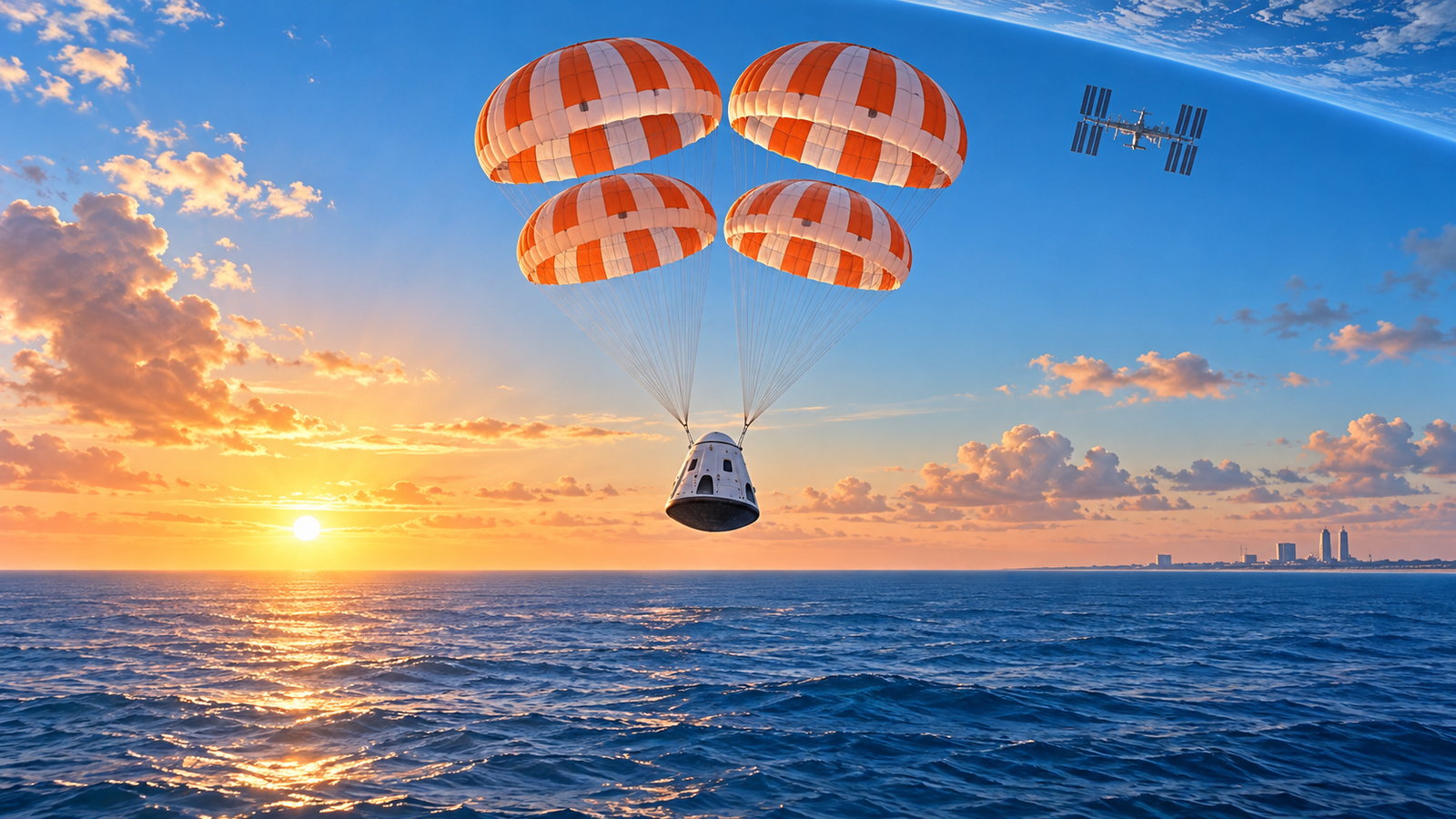
NASA reported that astronauts Jessica Meir and Jack Hathaway, European Space Agency astronaut Sophie Adenot, and Roscosmos cosmonaut Andrey Fedyaev returned safely aboard the Crew Dragon Freedom, splashing down in the Pacific Ocean off Los Angeles on October 8.[1]
NASA says the crew completed more than 3,792 Earth orbits and traveled more than 100 million miles during the mission.[1]
A Florida beginning
The trip started in February with a Falcon 9 launch from Cape Canaveral, Florida, followed by docking at the station the next day.[2] For Treasure Coast readers, that puts one end of this very long commute practically in the neighborhood—assuming your neighborhood has a launch pad and considerably stricter parking rules.
The science came home, too
NASA says Crew-12 logged hundreds of research hours. The work included testing stem-cell production for possible cell-based therapies, demonstrating on-demand IV-fluid generation for future missions, and studying how pneumonia-causing bacteria may contribute to long-term heart damage.[1]
The crew also studied nutrition and how physical characteristics may affect blood flow during spaceflight—work intended to help researchers understand how to keep astronauts safer and healthier on longer missions.[1]
NPR independently reported the safe return and Florida launch; for the experiment list, NPR repeated NASA’s account of studies involving subjects such as stem cells, crystal growth, and bone loss in microgravity.[2]
What everyday readers should expect
NASA’s release lists research topics and possible uses; it does not report a finished medical treatment or consumer product. The useful outcome today is a safely completed research mission and NASA’s documented record of what the crew studied.[1]
Space science is often less “instant miracle” and more “careful notebook in orbit.” The notebook part is what turns a spectacular trip into useful knowledge.
Keep the confetti factual
The splashdown occurred on October 8, four days before this article.[1][2] The date is part of the story—not something we are disguising with a newer headline.
NASA describes what the crew studied, but its release does not report final clinical or commercial results from those projects. We therefore are not claiming that the stem-cell, IV-fluid, pneumonia, nutrition, or blood-flow work has already produced a treatment or proven benefit on Earth.[1]
One happy thing to carry with you
A mission that began on Florida’s Space Coast ended safely after 237 days, more than 3,792 trips around Earth, and hundreds of hours devoted to research.[1][2] Sometimes good engineering is the art of making an extraordinary homecoming feel reassuringly ordinary.
Sources
- NASA: “NASA’s SpaceX Crew-12 Splashes Down, Sets Briefing to Discuss Mission” — October 8, 2026.
- NPR: “4 people on NASA’s Crew-12 mission return to Earth after 8 months in space” — October 8, 2026, 11:34 a.m. ET.
Reporting cutoff: October 12, 2026, 7:38 a.m. Eastern (11:38 UTC). Both linked sources were rechecked before private staging.