

☀ Morning Good News for Today
CU Boulder says its Hi-SNR Laboratory has rebuilt much of an open-source radar software framework so environmental researchers can start from shared, tested code instead of rebuilding the basics. [1] The project is called the Open Radar Code Architecture, or ORCA. Its public repository is available under the MIT License and includes test infrastructure alongside radar-control and data-processing components. [2]
Good news in 30 seconds
- CU Boulder published its current account on September 14, 2026, describing a year of rewriting, testing, and restructuring work. [1]
- The live repository describes ORCA as a framework for building environmental radars with commercial software-defined radios. [2]
- The institution names current or potential uses involving ice, trees, agriculture, avalanches, water resources, wildfire risk, and sea-level research. [1]
What happened
ORCA itself is not brand-new. CU Boulder says the code began elsewhere and that its team spent the past year rewriting most of the inherited codebase, adding unit tests, improving readability, and reorganizing it so more functions can be added. [1] The public repository currently exposes configuration, preprocessing, postprocessing, software-defined-radio control, and tests directories, along with installation and operating documentation. [2]
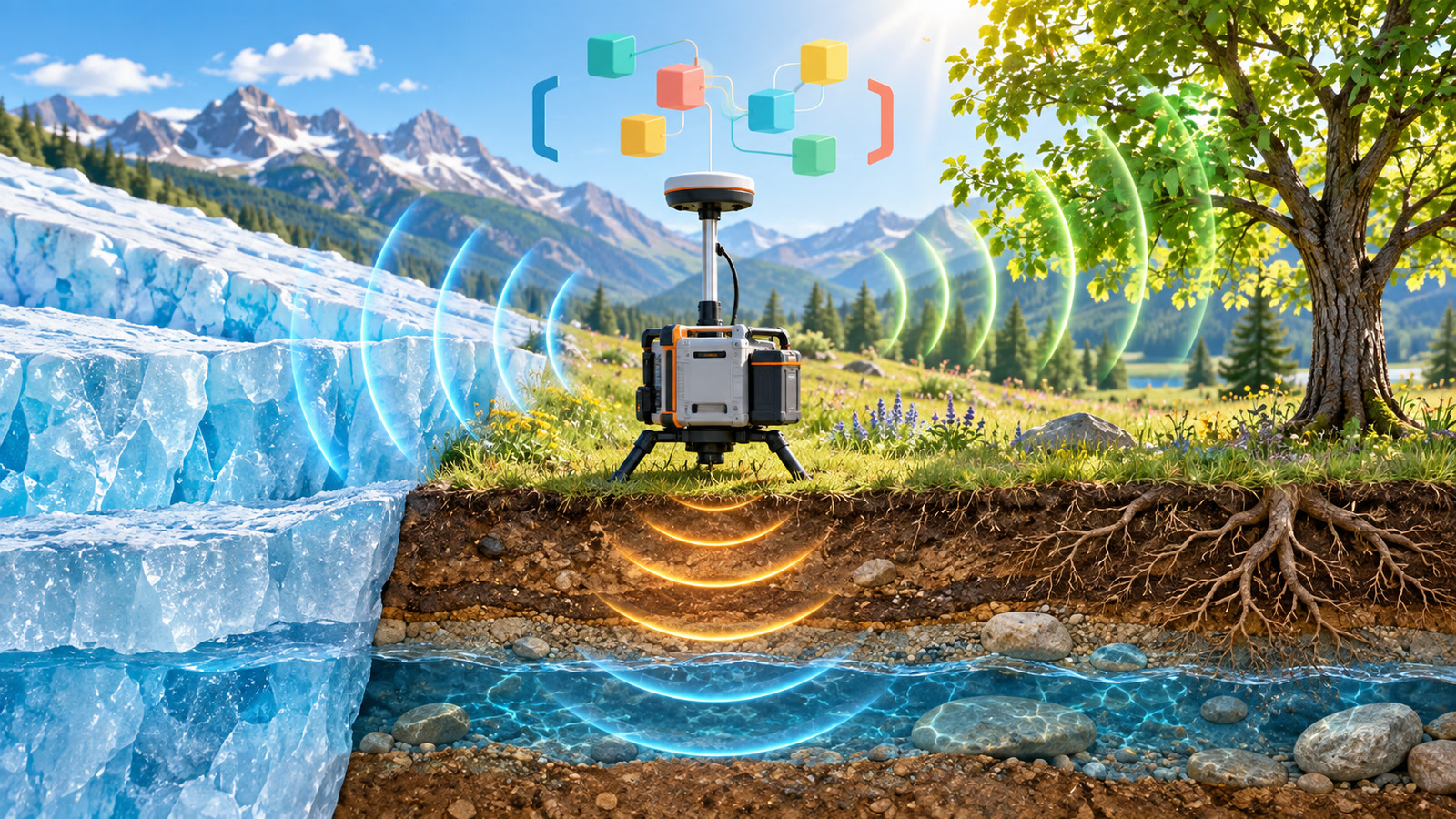
Environmental radar can help researchers study things that are hard to inspect directly, from conditions beneath ice to water moving through trees. CU Boulder describes its researchers using ORCA for ice-sheet and tree-water work. [1] A common software foundation can let a new project begin with inspectable code instead of treating every instrument as a from-scratch programming exercise.
The encouraging part is modest but practical: the code is public, the license is permissive, and testing is visible. [2] That gives students and research teams something concrete to inspect, challenge, adapt, and improve. Shared infrastructure will not answer the science by itself, but it can move more effort toward the actual environmental question.
Why this made us smile
Nobody goes into environmental science because they dreamed of rewriting the same radar plumbing for the fourteenth time. ORCA is an attempt to let antennas do the scanning while researchers keep a little more of their sanity.
What it could mean for everyday people
For everyday readers, this is a useful example of open-source work doing what it does best: making a complicated starting point visible and reusable. Students can browse the repository and documentation now. [2] Researchers still need suitable hardware and real expertise, but the first step no longer has to be “invent the whole software stack again.”
Keep the confetti factual
The current news comes from CU Boulder, and we found no meaningful independent current assessment of the revised codebase before publication. Claims about lower cost, broad hardware compatibility, setup time, adoption, measurement accuracy, and environmental outcomes have not been independently benchmarked in the sources we reviewed. The repository is real and inspectable, but public code is not the same thing as a plug-and-play field instrument. [1] [2]
One happy thing to carry with you
Open tools do not eliminate hard science; they give more people a fairer place to begin it. ORCA turns years of specialized radar engineering into a shared foundation—and that is exactly the kind of quiet technical progress worth cheering. [1] [2]
Sources and reporting notes
- University of Colorado Boulder ECEE — “Open-source coding platform makes radar technology accessible to scientists worldwide” (September 14, 2026; institution-authored report)
- HI-SNR Laboratory on GitHub — Open Radar Code Architecture public repository (live code, documentation, tests, and MIT license)
Corroboration note: We found no meaningful independent current report or benchmark before the reporting cutoff. Current improvement claims remain attributed to CU Boulder; repository availability, structure, and license were checked directly.