

☀ Morning Good News for Today
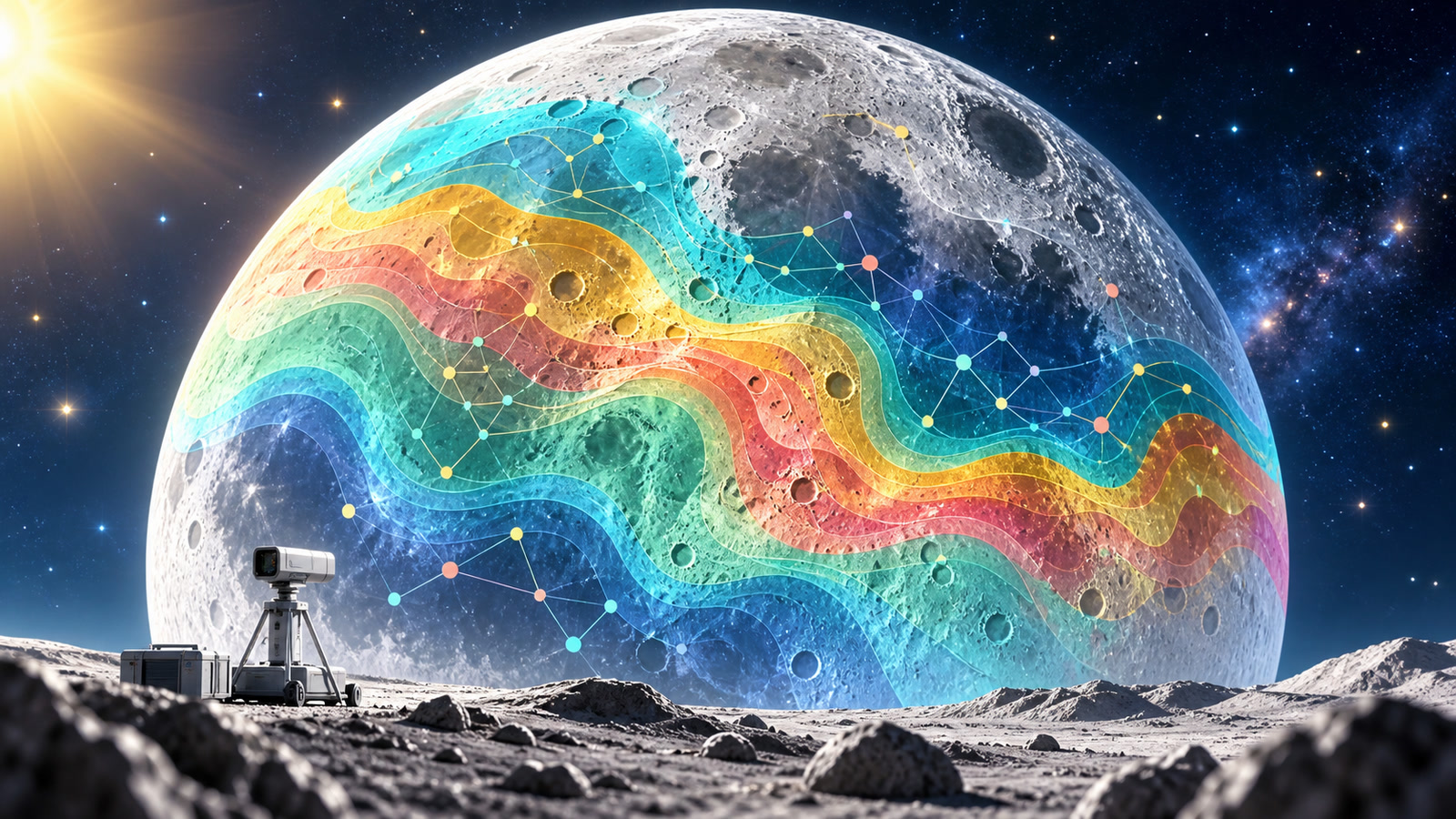
NASA and IBM have released a publicly available foundation model designed to help researchers study the Moon’s surface. [1] The model is hosted on Hugging Face, with a NASA-IMPACT code repository on GitHub, and Engadget independently reported the September 10 release. [2] [3] [4] Think of it as a new lunar map that never needs folding—and, mercifully, cannot roll under the passenger seat.
Good news in 30 seconds
- NASA says the model was trained on roughly 2 million lunar image tiles, including more than 1 million high-resolution camera images and nearly 964,000 multispectral images. [1]
- The public GitHub repository includes fine-tuning and inference code, while its README explicitly says pretraining code is not included. [3]
- The Hugging Face model record is public and lists Apache-2.0 license metadata, making the released weights and model files inspectable now. [4]
What happened
On September 10, NASA announced the NASA-IBM Lunar Foundation Model, which was developed with IBM Research and academic collaborators for lunar-science tasks. [1] Engadget reported the same-day release and the accompanying research dataset, confirming that the model could be downloaded from Hugging Face. [2]
Foundation models can give research teams a reusable starting point instead of making each group build every image-analysis component from scratch. [1] [3] NASA describes possible uses including mapping craters and volcanic landforms and investigating areas that may contain polar ice. [1] Those are research applications—not proof that any particular location contains ice or is safe for landing. [1]
The useful part is already tangible: model files, weights, technical documentation, and fine-tuning and inference examples are available for outside inspection and experimentation. [3] [4] That openness gives other researchers a path to test the work, challenge it, and build better tools. [3] [4]
Why this made us smile
The open-source community now has a new place to look for craters besides the issue tracker. More seriously, public tools make scientific progress easier to examine—and science is at its best when curious people can check the map for themselves.
What it could mean for everyday people
You do not need to be a lunar scientist to appreciate the pattern: public data becomes more valuable when it is organized into tools that others can inspect and adapt. Researchers and students can visit the model and code pages today, while everyone else gets a concrete example of AI being released as scientific infrastructure rather than kept behind a demo curtain. [3] [4]
Keep the confetti factual
NASA and IBM reported benchmark improvements, but Engadget did not independently reproduce those tests. [1] [2] NASA’s page describes a complete codebase on GitHub, while the repository README says pretraining code is not included; the narrower, verified takeaway is that fine-tuning and inference code are available. [1] [3] The model can highlight patterns worth investigating, but it cannot by itself confirm lunar ice, certify a landing site, or guarantee that results will generalize beyond the released tasks. [1] [3] Outside adoption, independent performance testing, and practical compute needs for smaller teams remain unknown.
One happy thing to carry with you
Today’s bright spot is wonderfully practical: a major lunar-science dataset and reusable AI toolkit are available for people beyond the original project team to examine and improve. [1] [3] [4] The Moon is still difficult. The map just got more shareable.
Sources and reporting notes
- NASA — “NASA, IBM Launch AI Foundation Model for Lunar Science” (September 10, 2026)
- Engadget — “NASA and IBM made an AI model for exploring the Moon” (September 10, 2026)
- NASA-IMPACT GitHub — “NASA-IBM Lunar Foundation Model” repository (live README checked September 11, 2026)
- Hugging Face — “NASA-IBM Lunar Foundation Model” public model record (live record checked September 11, 2026)