

🏥 Hospital comfort
🧠 Dementia care
A golden robotic dog named Peaches wears sunglasses while a 90-year-old Veteran strokes its fur. A white robotic seal turns toward a voice, blinks and coos when held. These are not replacements for nurses, family members or living therapy animals. In the right setting, they are small, responsive tools that can give a frightened or lonely patient something safe to hold, nurture and talk about.[6]
Why a robot can feel different from a stuffed animal
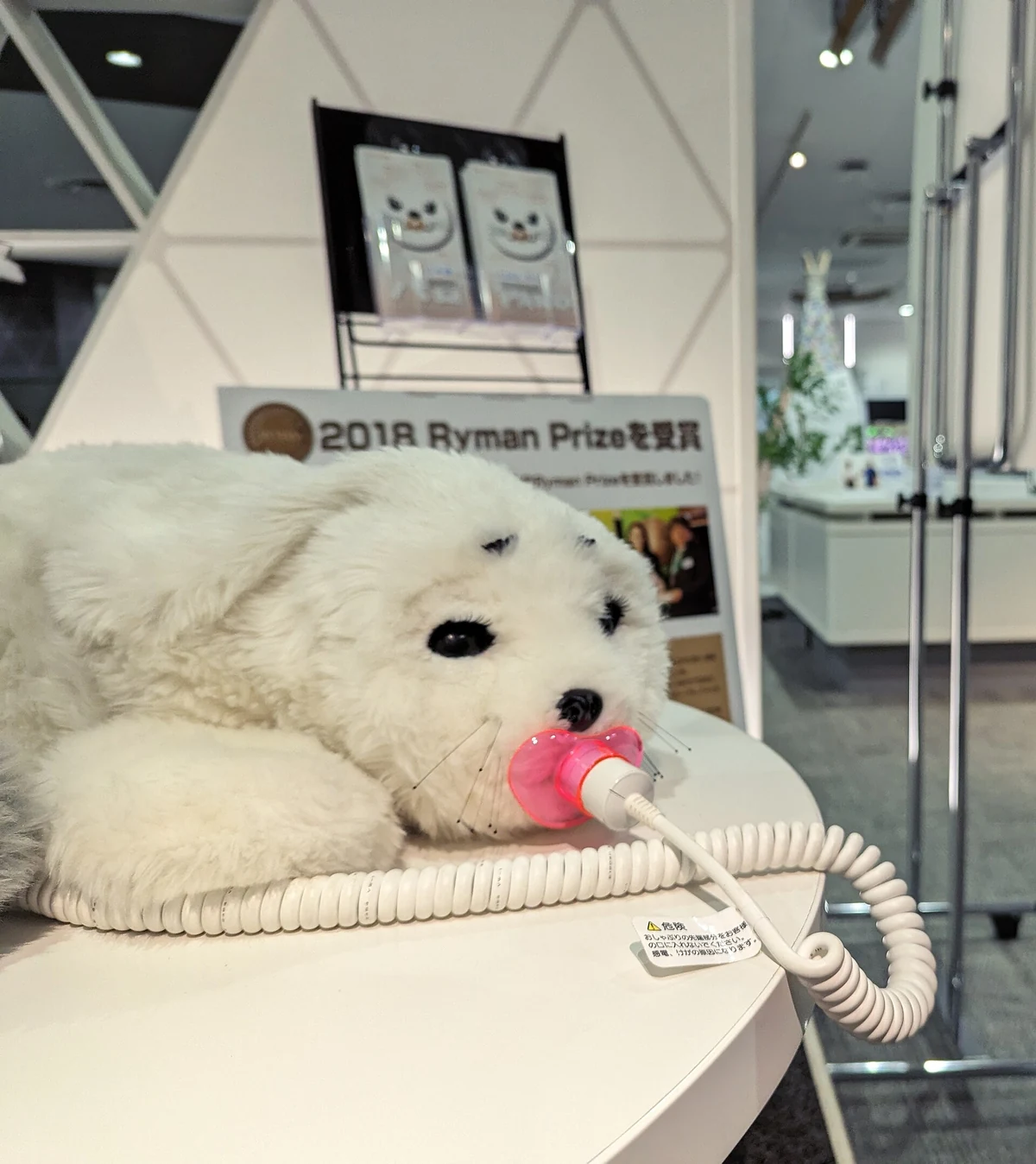
Robotic companion animals are designed to respond. PARO, the best-studied example, looks like a baby harp seal and reacts to touch, sound, light and the way it is held. Other devices resemble familiar dogs, cats or birds that purr, bark, blink or turn toward a person.[2][6]
That responsiveness matters because the interaction can become a two-way ritual: a patient pets the animal, it moves or vocalizes, and the patient responds again.[2] The machine does not understand affection the way a person or live animal does. What it can offer is predictable sensory feedback without feeding, walking, allergies, bites or a live animal’s unpredictable movement.
What happened in actual hospitals
A 2021 acute-care feasibility study followed 55 hospitalized patients with dementia through as many as five 15-minute PARO sessions. Researchers reported favorable acceptance in 212 of 223 sessions (95%), with speaking and petting among the most common interactions. Physiological readings changed statistically, but the authors explicitly said those changes were not clinically significant.[1]
A separate hospital study used video observations and interviews with 10 patients with dementia, plus staff interviews and focus groups. Its three themes came directly from patients’ experiences: PARO was “like a buddy,” “a conversation piece,” and something that “makes me happy.” Those accounts are meaningful, but a 10-patient qualitative study describes experiences; it cannot prove a universal medical effect.[2]
A 2024 pilot randomized trial analyzed complete data from 38 hospitalized older adults with dementia. The PARO group had shorter interactions yet received fewer psychotropic medications and had fewer instances of delirium than the human-visitor-only group. That is an encouraging signal, not a final answer: the study was small, and its own conclusion says short repeated visits may affect delirium and medication use.[3]
The broader dementia evidence is hopeful—and mixed
A 2023 systematic review and meta-analysis included 12 articles involving 1,461 participants in community, nursing-home or care-facility settings. It found small effects on anxiety, agitation and depression, and a moderate effect on medication use. The authors graded the overall evidence as low because of methodological limitations, small samples and wide confidence intervals.[4]
That caution matters. A calmer afternoon, a smile, a remembered pet or a conversation with a caregiver can be valuable even when a robot does not change the underlying disease. “Comfort tool” is a more honest description than “robotic cure.”
Real programs show the human side
At the Salem VA Medical Center’s Community Living Center, residents received robotic cats and dogs through an American Red Cross-supported program. The VA profiled Korean War Veteran Myron Harold with Peaches, the robotic dog he named. Staff said some residents formed meaningful connections and that the pets could prompt memories of happier, more comforting times.[6]
Those observations are not a controlled trial, but they show why hospitals and long-term-care teams keep experimenting: the robot can become a bridge—to a memory, a family story, a staff conversation or simply a quiet moment.
Watch PARO meet patients and caregivers
This short video from Passages Hospice shows PARO interacting with a patient and caregivers. YouTube’s privacy-enhanced embed is used below; playback still connects to YouTube.[9]
Video: Passages Hospice on YouTube. Loading or playing this embed is subject to YouTube’s privacy practices.
What responsible bedside use looks like
- Ask and observe. Some people delight in the animal; others may find it childish, confusing, noisy or unsettling. A patient’s refusal or discomfort ends the interaction.
- Keep humans in the loop. The device should support—not replace—conversation, reassurance, family contact, recreation therapy or clinical care.
- Follow infection-control rules. A registered hospital trial specifically includes testing a cleaning protocol, a reminder that shared furry devices need more than a quick visual check.[5]
- Use the right patient and moment. Most published evidence centers on older adults with dementia, not every hospital population.[1][3][4]
- Be honest about the machine. Staff should not trick a patient into believing the robot is alive. The value can come from play, touch and routine without deception.
- Protect dignity and privacy. Photos, recordings and device data require the same care as any other patient-facing technology.
What families can ask a hospital
- Is this meant for comfort, recreation, research or a clinical goal?
- How is the device cleaned between people?
- Who monitors the interaction and stops if the patient becomes distressed?
- Does the robot record audio, video or other personal data?
- How will staff know whether it is helping this individual?
- What human contact or treatment continues alongside it?
The bottom line
Robotic animals occupy a modest but fascinating space in care: more interactive than a plush toy, easier to bring into some clinical settings than a live animal, and capable of sparking real human responses. Small hospital studies and broader dementia research suggest they can help some people engage, feel comforted and experience calmer moments.
The responsible promise is not that circuitry can love a patient back. It is that a carefully designed object can sometimes help people find their way back to one another.
Medical note: This article is for general information, not medical advice. Robotic-animal programs should be selected and supervised by qualified care teams for the individual patient.
Photo notes
The featured PARO exhibit photograph is by Syced under a CC0 public-domain dedication.[8]
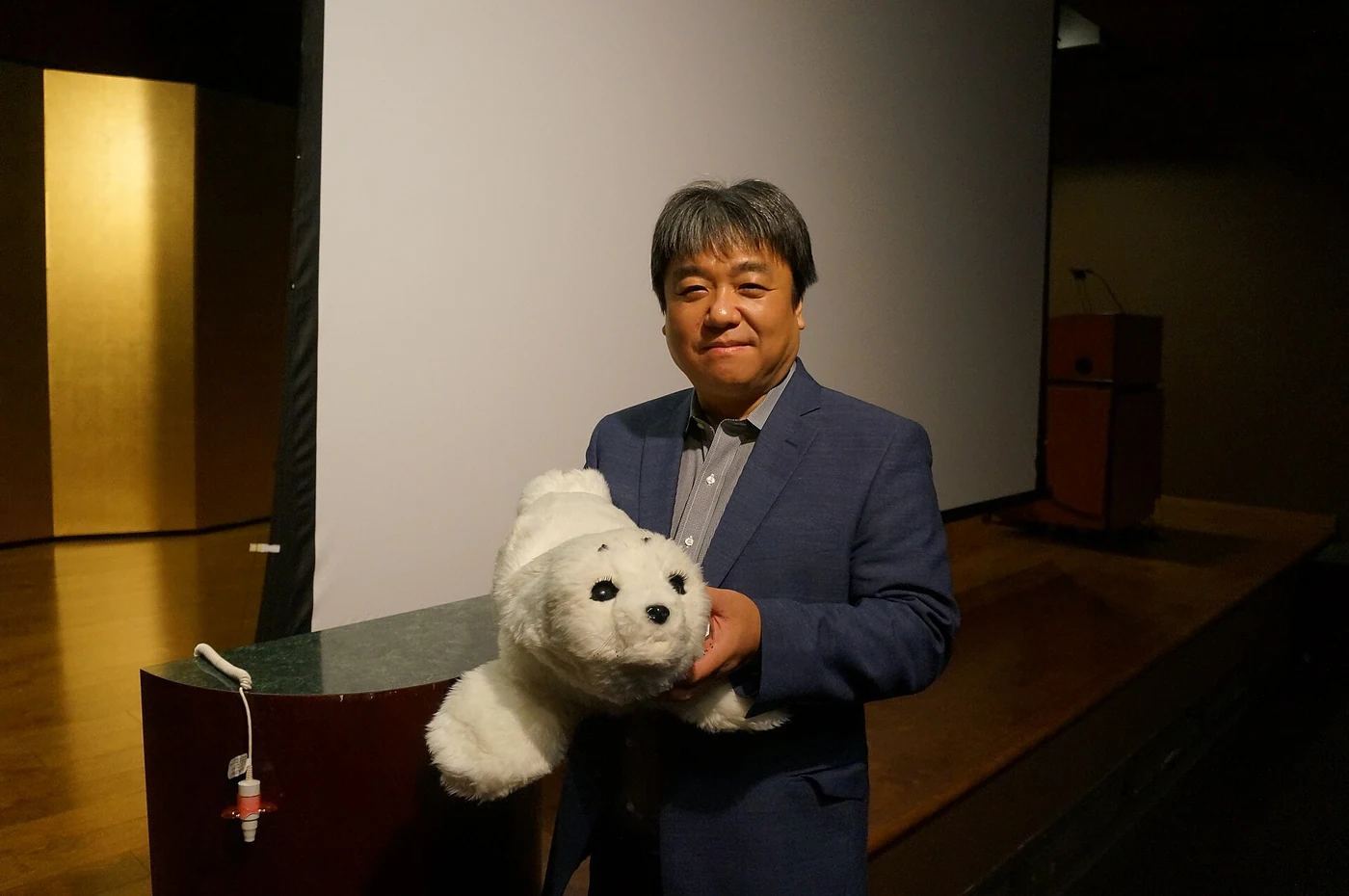
The supporting PARO inventor photograph is by Geraldshields11 under CC BY-SA 4.0.[7]
Sources
- Kelly et al., “The effect of PARO robotic seals for hospitalized patients with dementia: A feasibility study”
- Hung et al., “Exploring the perceptions of people with dementia about the social robot PARO in a hospital setting”
- Munsterman et al., “Use of Socially Assistive Robots to Improve Outcomes Among Hospitalized Older Adults With Dementia”
- Rashid et al., “The effectiveness of a therapeutic robot, ‘Paro’, on behavioural and psychological symptoms…”
- ClinicalTrials.gov, NCT05565703: “The Use of PARO to Decrease Agitation in Persons With Dementia and/or Delirium”
- U.S. Department of Veterans Affairs, “Robotic pets provide comfort for hospital residents”
- Wikimedia Commons: “Dr Takanori Shibata and PARO 2”
- Wikimedia Commons: “PARO seal robot for dementia, 2018 Ryman prize explanation”
- Passages Hospice, “PARO therapeutic robot”

