

☀ Morning Good News for Today
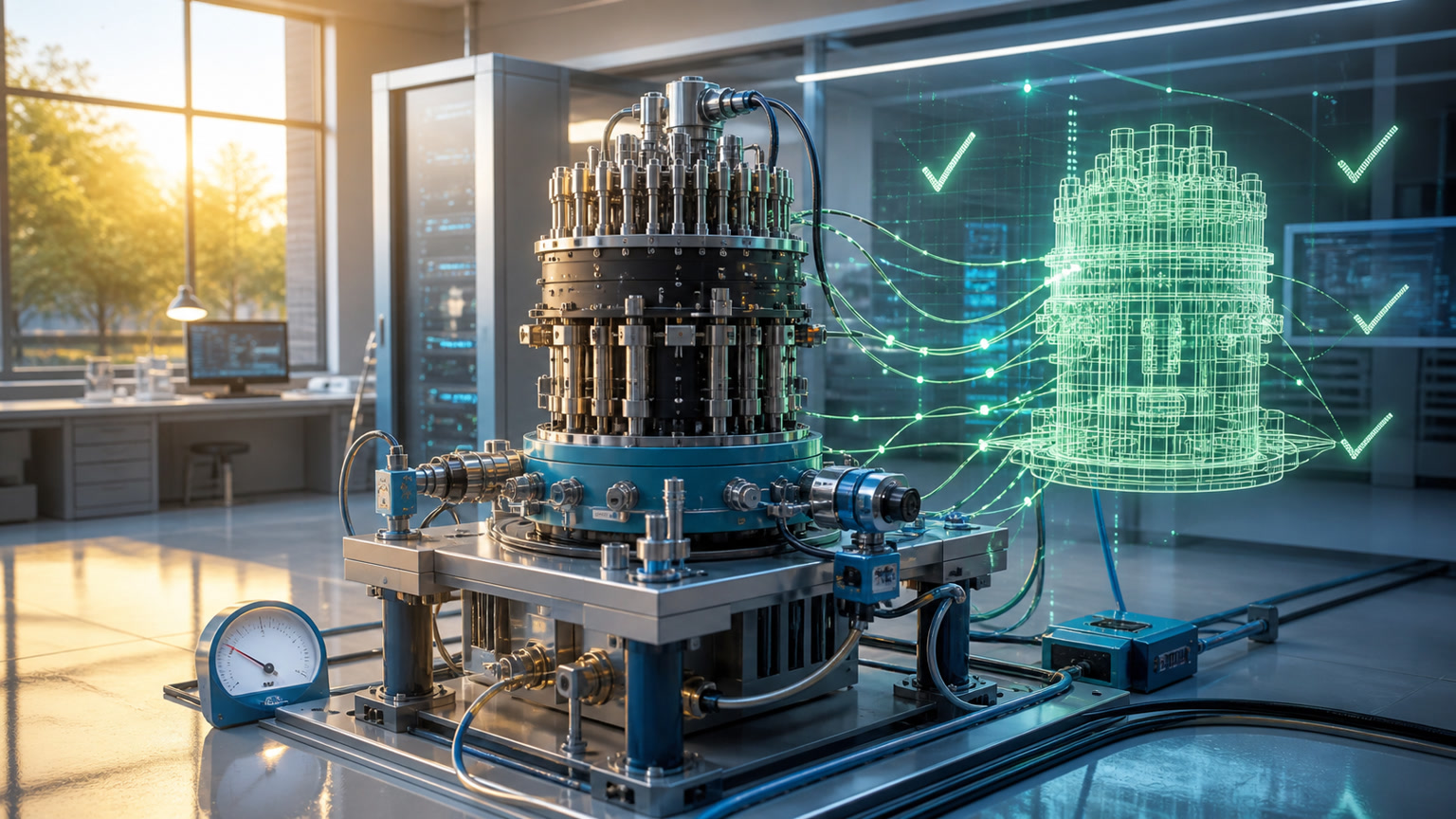
A compact reactor design has moved from computer models to a carefully controlled physical test. [1] Westinghouse says its eVinci microreactor reached zero-power criticality on August 24, giving engineers real nuclear-behavior data to compare with their design assumptions. [1] It is an encouraging engineering checkpoint—not a working power plant, not electricity generation, and definitely not permission to launch the confetti cannon at full pressure.
Good news in 30 seconds
- Westinghouse reported completing the test at the National Criticality Experiments Research Center in Nevada with Los Alamos and Idaho National Laboratories. [1]
- The test generated no electricity; independent reporting says engineers examined core behavior at very low power and compared the result with design models. [2]
- Westinghouse still plans more prototype testing and demonstrations, so commercial operation, licensing, cost, and full-power performance remain ahead—not accomplished. [1]
What happened
At 10:39 a.m. Pacific time on August 24, Westinghouse says the eVinci test assembly achieved criticality at the Nevada National Security Site. The company describes the result as validation of models and core-design assumptions, and names Los Alamos National Laboratory and Idaho National Laboratory as partners in the work. [1] “Criticality” means the nuclear chain reaction became self-sustaining; “zero power” means the test stayed at such a low level that producing usable heat or electricity was not the objective. Interesting Engineering independently reported the event and explicitly noted that the test did not generate electricity. [2]
Computer models are useful, but physical measurements are where elegant assumptions meet stubborn reality. A controlled low-power test can reveal mismatches before later, costlier, higher-power development stages. Westinghouse says the data will feed back into its iterative design process. [1]
This is measured progress: engineers completed a real test and collected data rather than only announcing a concept or future facility. The useful victory is a better-informed next design step, not a claim that the whole energy challenge is solved. [1]
Why this made us smile
This may be the rare engineering test where a power gauge hovering near zero deserves a high five. The point was not to light a bulb; it was to shine a brighter light on the design itself.
What it could mean for everyday people
For readers, the practical takeaway is how to decode a technical milestone without swallowing the marketing wrapper. Zero-power criticality is evidence that a core can behave closely enough to expectations to support further development. It is not evidence of delivered electricity, eight years of real operation, affordable power, regulatory approval, or a deployed safety record. [1] That distinction matters whenever a promising laboratory result starts wearing a commercial headline before breakfast.
Keep the confetti factual
The detailed measurements, uncertainty ranges, and model-by-model comparisons were not disclosed in the two opened sources. Independent coverage corroborates the event and its limits but substantially relies on Westinghouse’s announcement; it does not reproduce the company’s unpublished validation analysis. [2] Westinghouse’s claim that eVinci could operate for eight years without refueling is a design target, not an outcome demonstrated by this test. [1] Licensing, fuel supply, waste handling, security, accident analysis, community acceptance, construction cost, commercial timing, full-power behavior, and lifecycle performance remain unresolved in this narrow milestone.
One happy thing to carry with you
Good engineering is not one giant leap from sketch to socket—it is a trail of honest tests. This one gave a promising design a small, useful dose of reality.