

The Night Shift: Overnight Tech News with Jennifer Hudsen
9:00 p.m. edition • Cutoff August 20, 2026 at 9:17 p.m. EDT / August 21, 2026 at 01:17 UTC
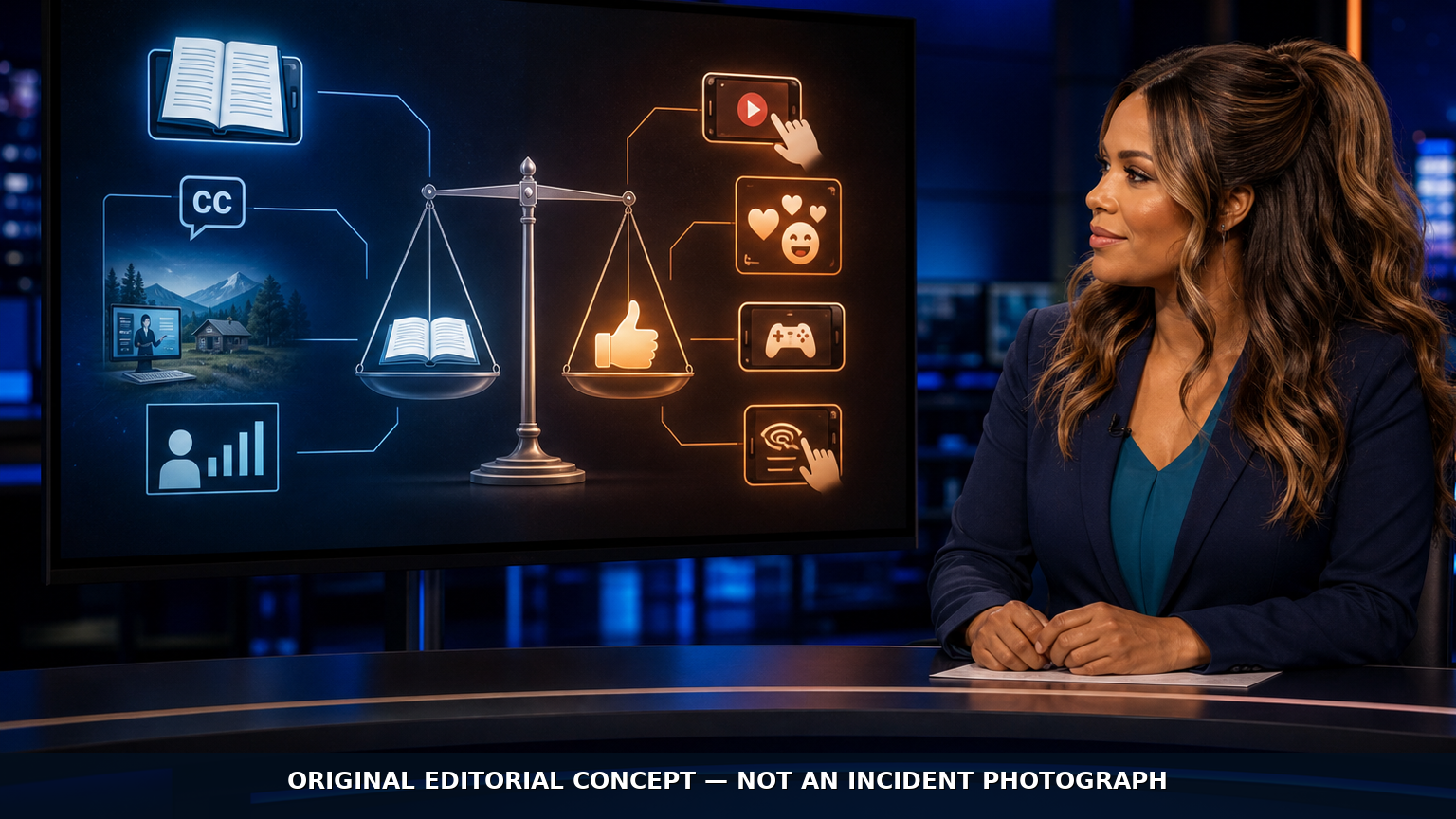
New U.S. education guidance says screen time alone is the wrong test for school technology
Status: The U.S. Department of Education issued a dated guidance letter—not a new law, regulation, nationwide screen-time limit, or product endorsement—asking states, school districts, and education-technology providers to judge digital tools by measurable educational value while minimizing unnecessary screen exposure.
What happened
In an August 20 letter, the Department’s Office of Elementary and Secondary Education drew a deliberate line between recreational screen use and technology used for instruction. Assistant Secretary Kirsten Baesler wrote that the central question should not simply be how long a student looks at a screen, but whether the particular tool improves learning and academic outcomes.
The letter asks schools to make technology decisions with evidence in view: effectiveness, cost, usability, accessibility, interoperability, implementation support, and educator experience. It encourages providers to publish rigorous independent evaluations when feasible, explain product limitations, give educators practical implementation guidance, and keep improving products with classroom evidence and student outcomes.
This is guidance and a set of considerations. It leaves decisions with states and local communities and explicitly calls for parent and teacher input. It does not compel a school to buy a device, use an AI service, discard a phone policy, or ignore concerns about privacy and digital well-being.
Why it matters
“Screen time” is easy to count, but the number can hide radically different experiences. Thirty minutes spent scrolling entertainment is not the same activity as thirty minutes using live captions, a text-to-speech reader, a remote advanced course, or an assessment that helps a teacher identify a learning gap. The Department’s approach asks decision-makers to examine purpose and results rather than treating every illuminated rectangle as equivalent.
That distinction can improve purchasing. Familiarity, login volume, or a convenient hardware bundle may be useful procurement signals, but none establishes educational effectiveness by itself. The guidance pushes toward a harder question: did the tool produce a useful learning outcome under real classroom conditions? A high login count is usage evidence, not proof that students learned more.
It also raises the bar for vendors. A polished demonstration, an AI label, or a claim that a platform is “personalized” should not be the end of the evaluation. The letter says responsible design is only the floor; effectiveness still depends on the tool, its purpose, and how it is implemented. For small districts with limited staff, that can support more disciplined contracts and renewal reviews rather than technology accumulation.
The practical tension is real. Outcomes can be difficult to measure, independent randomized trials are not feasible for every tool, and a product that helps one group may not help another. The letter itself asks leaders to examine why a tool works, for whom, and under what conditions. That is a more useful standard than either “all school technology is progress” or “all screens are harmful.”
Who is affected
Families and students: Parents may hear schools explain technology choices in terms of instructional goals, accessibility, and evidence rather than only minutes. The guidance does not erase parents’ concerns about distraction, sleep, privacy, advertising, or unnecessary device use. It gives them sharper questions to ask.
Teachers and school leaders: Educators are encouraged to review whether a tool supports strong teaching, not whether it can replace professional judgment. Districts may need better inventories, outcome reviews, professional learning, accessibility checks, and offboarding plans for products that do not justify their cost or classroom burden.
Education-technology providers: Vendors are being asked to disclose capabilities and limitations, support independent evaluation, design with teacher and parent input, minimize unnecessary exposure, and show how their product improves academic outcomes. Providers relying mainly on engagement metrics or promotional claims may face tougher procurement questions.
Students who need additional support: The letter specifically recognizes text-to-speech, speech-to-text, real-time captions, visual supports, virtual tutoring, and adaptive resources. A blunt screen-time rule can unintentionally restrict tools that provide access to grade-level instruction or keep a homebound student connected.
What readers should do
- Ask what job the tool is doing. A school or provider should be able to name the instructional goal in ordinary language. “Digital transformation” is not a learning outcome.
- Ask what evidence exists. Look for independent evaluation when available, local outcome data, educator feedback, and a clear explanation of limitations. Treat usage, time-on-task, and vendor testimonials as different from demonstrated academic improvement.
- Separate necessary access from optional exposure. Preserve assistive technology, required coursework, and meaningful teacher-led activities while questioning duplicated apps, idle device time, autoplay, notifications, and recreational features.
- Review privacy and account scope. The letter flags student-data protection as part of responsible technology. Families and schools should understand what information is collected, who receives it, how long it is retained, and whether an account can be deleted cleanly.
- Build a review date into the purchase. Before renewal, compare the promised goal with actual classroom results, support burden, accessibility, interoperability, and total cost. A tool should not become permanent simply because canceling it is inconvenient.
Read the official Department of Education letter
Upside, cautions and unknowns
Upside: The guidance recognizes that purposeful technology can expand rural coursework, assist students with disabilities, speed useful feedback, and connect students to instruction that may not exist locally. Its call for implementation and outcome reviews could support decisions to discontinue tools that do not meet instructional goals instead of equating adoption with success.
Cautions: A focus on “educational value” must not become a loophole for unlimited device use. Vendor-funded studies can carry conflicts, outcome measurements can be narrow, and software can be instructionally useful while still creating privacy, security, accessibility, or distraction problems. Evidence needs context and independent scrutiny.
Unknowns: The letter does not set numeric screen-time limits, prescribe one evaluation method, name approved products, establish an enforcement mechanism, or explain how resource-strapped districts should fund rigorous evaluations. Its effect will depend on what states, districts, schools, parents, teachers, and vendors do with the recommendations.
Jennifer’s analysis: The most important phrase is not “more technology” or “less technology.” It is “show the educational value.” If schools apply that consistently—and remain honest about privacy and unnecessary exposure—the guidance could produce fewer apps, better-supported tools, and clearer accountability.
What the guidance changes—and what it does not
| Area | What the letter encourages | What it does not establish |
|---|---|---|
| Screen time | Distinguish recreational use from purposeful instructional technology and minimize unnecessary exposure. | No national minute-by-minute cap and no claim that all instructional screen use is harmless. |
| Purchasing | Consider evidence, cost, usability, accessibility, interoperability, support, and educator experience. | No approved-product list, mandatory contract, or automatic renewal rule. |
| Evidence | Seek independent evaluations, randomized trials when feasible, implementation reviews, and local outcomes. | No single universal test that proves a tool works for every student and classroom. |
| Decision-making | Keep authority with states and local communities, with parent and teacher input. | No federal takeover of local device or classroom policy. |
| AI and privacy | Build from principles that technology should be educator-led, ethical, accessible, transparent, and protective of student data. | No blanket approval of classroom AI and no replacement for product-specific privacy and security review. |
Frequently asked questions
Did the federal government ban recreational screen use in schools?
No. The letter says recreational and instructional uses should be distinguished and that unnecessary exposure should be minimized. It offers considerations; it does not announce a federal ban.
Does this mean schools should increase student device time?
No. The guidance argues against judging every use by minutes alone, but it also calls for intentional use, measurable outcomes, and less unnecessary exposure. A tool that adds screen time without instructional value would not satisfy the stated test.
Is an accessibility tool counted differently?
The letter does not create a separate accounting formula, but it explicitly identifies assistive tools such as captions, text-to-speech, and speech-to-text as examples of technology that can expand access. Decisions should consider the actual educational and accessibility function.
Is this only about AI?
No. The letter covers education technology broadly. It references earlier AI principles—educator-led, ethical, accessible, transparent, and protective of student data—as a foundation that can apply beyond AI.
What is the best question a parent can ask?
Ask: “What specific learning or accessibility outcome is this tool expected to improve, and what evidence will the school review before renewing it?” That invites a concrete answer without assuming the device is automatically good or bad.
Sources
- U.S. Department of Education, Office of Elementary and Secondary Education — Dear Colleague letter on education technology and screen time, dated August 20, 2026. Primary source; PDF checked at the reporting cutoff.
- THE Journal — “Department of Education Issues New Guidance on Education Technology and Screen Time”, by Rhea Kelly, dated August 20, 2026; publisher RSS timestamp 22:46 UTC. Independent education-technology reporting checked at the reporting cutoff.
Reporting cutoff: August 20, 2026 at 9:17 p.m. EDT (August 21 at 01:17 UTC). This strict-window subject was first observed in THE Journal’s publisher RSS at 22:46 UTC, within the 6:30–9:17 p.m. EDT core window. It was checked against The IT Guys’ daytime and prior Night Shift coverage. The official letter is date-only; no time of issuance is inferred.